
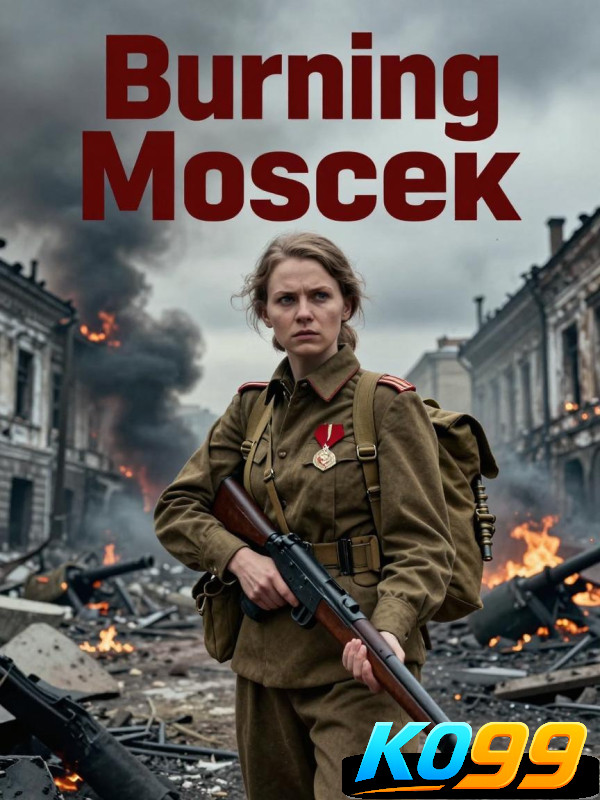
A typical time-travel novel chronicling the personal experiences of an ordinary female soldier during the Great Patriotic War.



Chapter 732: The Leak Scandal (Part 2) Hearing Trikov’s furious outburst over the phone, I was deeply afraid that when he arrived, his bad mood might cause trouble for Karpov, which in turn could affect the morale of all the officers and soldiers who had defected. So, after offering him a few simple words of comfort, I had Basmanov escort him and his group of officers to rest first. After they left, I asked Razumyeva with a puzzled look: “Comrade Lieutenant, let me ask you this. Aside from the plain-language communications we had today with Captain Serebryanoy and Comrade Savchenko, have we made contact with any other units?” Razumyeva frowned and thought for a moment, then slowly shook her head and replied, “No, Comrade Division Commander. Aside from the two units you mentioned, there have been no other radio communications.” “What on earth is going on, Comrade Division Commander?” Since I had just finished a call with Tkachev and then gone to speak with Karpov and the others, and given that the command post was crowded, I hadn’t explained to Kirillov and the others exactly what had happened for the sake of secrecy—so they were still completely in the dark. After exchanging glances, Chief of Staff Akhromeyev posed this question to me. “Here’s the situation: The Commander just called to ask if we’ve been using our radio equipment frequently for plain-text communications today.” After briefly repeating Tkachev’s words, I added with a puzzled look, “After asking that, the Commander didn’t say anything else—he just said he’d be here shortly.” Hearing my explanation, the three of them finally understood. Kirillov nodded and said, “ “No wonder. After you finished the call with the Commander, you only exchanged a few brief words with Captain Karpov before sending him on his way. I found that rather odd at the time, but now I understand—you were afraid Comrade Commander might be in a bad mood when he arrived here, and if he’d taken it out on Karpov and the others, it would have put them in an awkward position.” “Commander, do you have any idea why the Commander-in-Chief came here?” Akhroomeyev asked impatiently as soon as Kirillov finished speaking. Faced with Akhroomeyev’s question, I could only offer a wry smile; I had no clue. Kirillov thought for a moment, then said cautiously, “As I see it, there might be some problem with the army group’s communications. Otherwise, Comrade Commander wouldn’t have rushed all the way to our division.” Bantayev, who had just returned from outside, listened to our conversation and said with a bitter expression, “ “I think the Political Commissar has a point. Currently, the army group commands a vast number of units. Not only is there no exchange of intelligence between them, but the communication equipment is also a hodgepodge, and there’s no unified communication protocol among the units. What’s even more critical is that some unit commanders disregard communication security protocols, frequently broadcasting messages in plain text without a care, which results in the enemy easily intercepting our intelligence.” Hearing Ban Tai Laye’s words, I couldn’t help but break out in a cold sweat. After all, during the time we held the station following the capture of Grams and his men, I had been communicating daily in plain language with Tkachev and Sheyerykov—I had no idea if I’d inadvertently leaked our military secrets. Noticing my unusual expression, Kirillov asked with concern, “Oshanina, what’s wrong? Are you feeling unwell?” I waved my hand and voiced my unease: “Political Commissar, hearing the Deputy Division Commander say that, I’m actually a bit worried. Back when our division was still part of the 64th Army, we held out at a station behind enemy lines for a while. At that time, I spoke in plain language with headquarters and the division almost every day.” “Were you later discovered by the enemy?” Kirillov asked anxiously. “No,” I replied, shaking my head. “We weren’t detected by the enemy during our stay. In fact, by a stroke of luck, we even captured Captain Beckman and his unit when they came to relieve us.” After hearing this, Bantayev smiled and reassured me: “Comrade Division Commander, there’s no need to worry. “I think that since you weren’t detected by the enemy even at the time of withdrawal, it’s likely because their advance was too rapid, and the intelligence unit responsible for monitoring hadn’t caught up in time. That’s why your plaintext communication didn’t lead to any adverse consequences.” Hearing his analysis, I couldn’t help but breathe a huge sigh of relief. Tikhov arrived at headquarters half an hour later, accompanied by Lieutenant Colonel Weinrub and two soldiers. We all hurried forward to salute him. He did not return the salute, but merely nodded at us. After glancing around the room, he strode casually over to the table, sat down, and then looked up at me and asked, “Oshanina, let me ask you: why did you use plaintext communications so frequently tonight? Don’t you know that this is strictly prohibited?” “Comrade Commander, please allow me to explain. ” I knew Tkachev had arrived in a rage, so even if I was going to be scolded, I had to explain the situation clearly to him to avoid any unnecessary misunderstandings. “Go on!” he said coldly. “Early this morning, I sent men to capture the enemy positions three kilometers north of Mamayev Hill, and I dispatched others to contact Karpov’s battalion—who were planning to defect—to have them join our relief forces and enter Mamayev Hill from the area we’ve occupied.” No sooner had I said this than Tkachev raised his hand to interrupt me: “Wait a minute. What did you say? You sent men to capture the German front-line positions, and Karpov’s Eastern Battalion has already defected?” “Yes, Comrade Commander,” I replied firmly: “After dark last night, I sent Comrade Savchenko with a detachment to make contact with Captain Karpov. At the same time, I dispatched the Korichin Company of the 4th Regiment to move along the riverbank downstream and launch a surprise attack on the enemy positions. To ensure safety, I also deployed the Serebryanine Battalion of the 1st Regiment in an ambush on the main front, ready to launch a full-scale assault should the Korichin Company’s surprise attack fail.” “What was the result? ” Trokhov asked anxiously, “Did we take the positions?” “We did.” I said calmly. “Captain Kolichin’s unit made smooth progress initially and captured most of the positions without alerting the enemy. Later, for some reason, they were discovered, and a firefight broke out. Seeing that things were taking a turn for the worse, I immediately ordered the Serebryanine Battalion to launch an attack. After capturing the position, I radioed Captain Serebryanine, instructing them to consolidate their positions and provide cover for our friendly forces withdrawing from the west.” “Did Captain Karpov’s unit manage to withdraw safely?” Tkachev asked again. “ “They had barely begun their withdrawal when the Germans spotted them. German pursuit units closed in from both the north and west, and soon engaged their rearguard. Because the withdrawal was so sudden, not all officers and men knew exactly where they were headed. Under the enemy’s frenzied assault, some cowardly officers lost their nerve and defected to the Germans with their men.” Although Karpov’s unit was less than two kilometers from the positions held by our forces at that time, having lost a third of their strength, many in the unit felt uncertain about their next course of action. Under these circumstances, Comrade Savchenko had no choice but to send an urgent distress call to us via Captain Karpov’s radio. I immediately contacted Captain Serebryanoy and ordered him to personally lead a unit to reinforce Captain Karpov. I gave him a strict order: “As long as not all the men of Karpov’s battalion have passed through our sector, even if his unit is reduced to a single man, he must not retreat a single step.” My account made Tkachev even more anxious; he instinctively asked, “What happened next?” “They arrived just in time. In Captain Karpov’s own words, had they been just a few minutes later, his unit might well have collapsed completely. Under the cover of Captain Serebryan’s unit, the defected Karpov Battalion entered our positions and withdrew eastward along the trenches, moving upstream along the riverbank, and successfully reached Mamayev Hill. However, due to casualties and desertions, the unit had lost half its strength, leaving only a little over two hundred men in the end.” “Over two hundred is quite an achievement,” Tkachev said with a faint smile. “As long as Captain Karpov returns to our ranks, it is a victory regardless of how many men he brings with him. The significance of their defection lies in the shock it dealt to the enemy’s morale; its political implications are immeasurable. What about our casualties?” Hearing Tkachev’s question, I quickly turned to Akhroomeyev and said, “Chief of Staff, since you have the latest statistics, please report them to the comrades at headquarters.” “Yes, sir!” Akhromeyev replied, then stepped forward and reported loudly to Tkachev: “The 2nd Battalion of the 1st Regiment, commanded by Captain Serebryanoy, suffered 175 killed and 112 wounded; the Korichin Company of the 4th Regiment, along with the two companies that later reinforced them, suffered 103 killed and 79 wounded.” Upon hearing these casualty figures, Tkachev sprang to his feet, his lips pressed tightly together. He paced back and forth across the command post with his hands behind his back twice before letting out a long sigh and saying, “Comrade Oshanina, although your casualties are somewhat high, you managed to successfully evacuate the remnants of Karpov’s battalion. Such a price was well worth it.” Seeing that Tkachev was not pursuing the matter of the radio station, and even praised the operation to assist Karpov’s battalion, I secretly breathed a sigh of relief, and the weight on my heart lifted. “Where is Captain Karpov?” Tkachev suddenly asked again. “I’d like to see him.” “We’ve arranged for him to rest. ” Kirillov quickly stepped forward to answer Tikhov’s question. “If you wish to see him, please wait a moment; I’ll send someone to fetch him immediately. Just tell him that Army Group Commander General Tikhov wishes to meet with him personally—I’m sure he’ll be delighted.”