
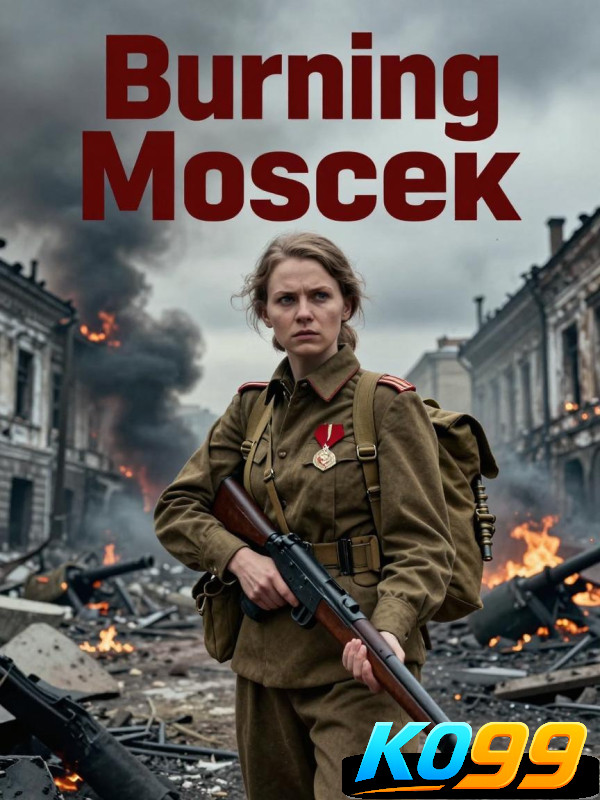
A typical time-travel novel chronicling the personal experiences of an ordinary female soldier during the Great Patriotic War.



Chapter 123: The Glorious Guards Division (Part 2) Under a tree several dozen meters away, four motorcycles were parked. Seven or eight German soldiers, using the bikes as cover, were firing frantically at the advancing soldiers. These enemies were likely the motorcycle squads Panfilov had mentioned last night—the ones that had bypassed our defenses and sneaked behind our lines to launch a surprise attack. I had once commanded the Guard Battalion of the 316th Infantry Division and was well aware of that unit’s formidable combat prowess. With their equipment and combat experience, eliminating those rampant German soldiers across the way would have been a breeze. But now, the unit engaged in battle was nothing more than a guard platoon hastily assembled from staff officers, clerks, and political officers, whose combat effectiveness was severely compromised. Moreover, their arsenal consisted almost entirely of pistols; the occasional rifle was practically considered heavy weaponry. In terms of firepower, they were in a completely different league compared to the Germans. Sending such a unit into battle was tantamount to suicide. Yet, upon learning that the division headquarters was under attack, these soldiers instinctively rushed out from their positions and charged bravely toward the enemy’s intense fire without hesitation. Watching one soldier after another fall, my blood boiled. Forgetting my own safety, I grabbed my rifle and tried to rush out. Unexpectedly, Panfilov grabbed me by the sleeve again. He held me tight and snapped sternly, “Stop! What do you think you’re doing? Running out there to be a sitting duck for the enemy?” Before I could say a word, he turned and shouted down: “Comrade Political Commissar, did you get through on the phone?” “I did!” the Political Commissar replied from below. “I’ve made contact with the 1073rd Regiment, they’re sending a company over immediately to break the siege.” Hearing that reinforcements would arrive soon, I breathed a sigh of relief. With great effort, I crouched down, rested my rifle on the doorframe, aimed at the German positions, and pulled the trigger. Submachine guns are highly effective at close range, but hitting distant targets with precision is not so easy. I emptied the entire magazine in one go, yet all I managed was to send sparks flying from the bodywork of one of the motorcycles—not a single hair on the Germans’ heads was harmed. My firing drew the Germans’ attention once again. Almost the moment I emptied the magazine, several bullets whizzed past and struck the doorframe. Fortunately, I had retreated two steps down the stairs just then; otherwise, I would have been hit. Panfilov, who had been standing close to the wall, first bent down to pull a magazine from a German soldier’s body, then took the submachine gun from my hands. As he reloaded, he said, “Lida, don’t shoot yet. Stay here and wait patiently for a moment. Our reinforcements will be here soon. Once they arrive, we’ll charge out together.” “Yes!” I replied, taking the gun from him, crouching down, pricking up my ears to listen for sounds from outside. Although gunfire still rang out continuously, it was noticeably sparser than before. Aside from the occasional pistol and rifle shots, most of the time it was the rattling of submachine guns and machine guns. From the sounds of the gunfire outside, I could tell that most of the officers and soldiers in the guard platoon had been killed, with only a few survivors still tenaciously fighting the Germans. Hearing that the Germans had gained the upper hand outside, I instinctively raised my rifle barrel toward the entrance, my finger on the trigger, ready to fire without hesitation the moment anyone showed their head. Under no circumstances could I let the Germans storm into the division headquarters. I don’t know how long it was before anyone finally appeared from above, but I didn’t dare let my guard down for a moment. Just as I was feeling anxious, the gunfire outside suddenly intensified. Hearing the gunfire, I grew even more anxious and glanced at Panfilov standing beside me, only to find a look of joy on his face. “Our reinforcements have arrived!” he exclaimed excitedly. As if to confirm his assessment, a voice suddenly rang out from above: “Are there any of our own inside?” It was spoken in Russian—a language I knew well—not German. “Lida, don’t shoot. It’s our own people.” Panfilov pressed my gun barrel down with his hand, then shouted up at the top: “This is Division Commander Panfilov. Which unit are you with?” “We’re from the 1073rd Regiment. We heard the division headquarters was under attack by the Germans and were ordered to come to the rescue,” the man above replied, cautiously stepping inside. Seeing the man wearing a short, earth-colored leather coat and a woolen military cap—the typical uniform of our troops—I couldn’t help but breathe a deep sigh of relief. I lowered my gun and stood up straight. The man was a lieutenant. He approached Panfilov, shifted the pistol he was holding to his left hand, then saluted and reported, “Comrade General, Lieutenant Ramis, company commander of the 1073rd Regiment, reporting for duty. My company is currently mopping up stragglers outside. I await your orders!” Hearing the gunfire outside grow sparse once more, I guessed the battle was nearing its end. Panfilov holstered his pistol and said, “Come on, let’s go take a look.” With that, he turned and headed for the door. Seeing the lieutenant follow Panfilov out the door, I picked up my submachine gun and followed, though my finger remained instinctively on the trigger. By the time I reached the doorway, the fighting outside had already ended. Of the German soldiers who had launched the ambush, aside from those killed in action, three had been taken prisoner and were now being escorted toward us by our soldiers. Panfilov pointed at the escorted German soldiers and said to Ramis, “ “Find someone who speaks German and interrogate these prisoners. Find out which unit they’re from and how many of them came in total.” “Yes, sir!” the lieutenant replied, then ran forward, submachine gun in hand. “Tap-tap-tap!” With three gunshots, Panfilov, who had been standing in front of me, jerked violently. He immediately clutched his chest with both hands and fell backward, collapsing with a thud right beside me. I froze for a moment, then looked down. Beside the bodies of the two soldiers lay a German soldier—he was the one who had fired those shots. Almost instinctively, I raised my submachine gun, aimed at him, and pulled the trigger. Although submachine guns aren’t very effective at long range, hitting a target a few meters away was a breeze. A hail of bullets instantly reduced the wounded German soldier to a bloody pulp, sending blood flying everywhere. It was then that I realized the two Germans who had just ambushed the division headquarters were the same ones: one had been knocked down during a struggle with a guard, while the other had been killed by Panfilov after throwing a grenade into the command post. I emptied the magazine, then deliberately walked over to kick the German soldier I’d reduced to a bloody pulp, making sure he was as dead as could be, before turning to check on Panfilov’s injuries. Panfilov lay on his back, convulsing uncontrollably. The blood flowing from the wound on his chest slowly pooled into a stream, which gradually swelled into a river, seeping into the earth and slowly staining the pristine white snow red. “My old friend, what’s wrong with you?” I stood dumbfounded before the division commander, along with the soldiers who had gathered around. The political commissar, who had just emerged from the building, saw the scene, let out a wail, and rushed forward to embrace Panfilov’s body. Seeing our group standing around in a daze, Political Commissar Yegorov flew into a rage: “What are you all still standing there for? Hurry up and lend a hand—carry Comrade Division Commander to headquarters!” Hearing the commissar’s outburst, I snapped out of my stupor and quickly ordered the men nearby to act: “You four, help the commissar carry Comrade Division Commander to headquarters.” The soldiers scrambled to lift Panfilov and escorted him toward headquarters. I then called over Lieutenant Ramis and ordered him: “Comrade Lieutenant, take a few men immediately and go find the army doctor. Hurry!” “But!” Ramis said hesitantly, “Comrade Division Commander just told me to interrogate these German soldiers.” Hearing this, I couldn’t help but fly into a rage. Those Russians are so rigid—they can’t even distinguish between what’s urgent and what isn’t. Without sparing him any courtesy, I shouted at him: “What happened before is in the past; this is the present! Don’t you see how many of our comrades those German soldiers have killed? Forget about interrogation—drag them all to the edge of the woods and shoot them, leaving not a single one alive!” “Comrade Lieutenant Colonel! Isn’t this a bit…” Ramis tried to object, but before he could finish, I cut him off and issued a direct order: “This is my order. Do you understand? You are to carry out orders from your superiors without question. Now go and complete the task I’ve assigned!” “Yes, sir!” Seeing that I’d lost my temper, Ramis reluctantly acknowledged the order and turned to carry it out. With several gunshots, the three German soldiers who’d been captured moments earlier fell to the ground. I watched the execution of the German soldiers with a blank expression, then, rifle in hand, turned and walked back toward headquarters. Inside the command post, the wooden table that had been overturned moments ago had been set right, and a kerosene lamp had been hung from the ceiling, bathing the entire room in light. Panfilov lay on a camp bed placed against the wall. The soldiers who had carried him in stood nearby, while the political commissar crouched by the bed, his lips almost touching the division commander’s ear as he shouted, “ “Ivan Vasilyevich, my dear old friend, wake up!” I also walked over to the bed and saw that although the political commissar was shouting loudly, Panfilov showed no reaction whatsoever. “Old friend, can you hear me? You’ve got to hang in there—you’re not allowed to die. There’s plenty of work ahead of us. Who knows, you might need to lead the troops in a counterattack as early as tomorrow. Can you hear me?!” But Panfilov’s eyes remained tightly shut. Seeing this, I couldn’t help but sigh inwardly. With a bullet wound to the chest and having lost so much blood, the division commander’s chances of survival looked slim. “Report! Comrade Commander, I’ve found the army doctor. May he come in?” A voice called out from the doorway. I looked in that direction and saw that it was Ramis and another officer carrying a small synthetic leather case. “Quick! Hurry over here and see how Comrade Division Commander is doing!” The political commissar, as if clutching at a lifeline, called out loudly to the two men who had just entered. The officer carrying the small case stepped forward, crouched by Panfilov’s bedside, took his wrist to check his pulse, sighed softly, then moved his hand to feel the Division Commander’s carotid artery. He stood up, shook his head, and said, “It’s too late. Comrade Division Commander has fallen!” “Nonsense!” The political commissar leaped to his feet, grabbed the military doctor by the collar, and roared furiously, “You must have made a mistake. The commander isn’t dead. Check him again immediately!” The military doctor smiled wryly and said, “Comrade Political Commissar, I’ve already examined him thoroughly just now. The commander has truly passed away. Look, there’s no breath. Blood is flowing from his mouth. Please believe me—I’m a doctor with nearly twenty years of experience. I would never fail to tell the difference between life and death.” After hearing the military doctor’s words, the Political Commissar took two steps back, plopped down on the ground, and muttered, “No, no, it can’t be. You must have made a mistake.” “Comrade Division Commander, I have good news to share with you!” An officer burst in as the voice rang out. I turned to look and saw that it was Lieutenant Colonel Leviyakin, the commander of the 1077th Regiment, who had left last night. Seeing our group standing silently in the room, Leviyakin, who had just entered, couldn’t help but ask curiously, “What’s going on here? Has something happened?” “Comrade Division Commander has fallen!” I replied in a low voice. “What? Comrade Division Commander has fallen?” He rushed to the bed in two strides and bent down to examine Panfilov’s body. When he realized this was no joke, he froze in place, standing motionless before the bed. Just as the room was filled with grief, the telephone on the table rang at the most inopportune moment. Seeing the political commissar sitting on the floor, muttering to himself, and Leviyakin standing motionless before the body, I hurried over to the phone. I set my submachine gun on the table and picked up the receiver: “316th Division Headquarters, speaking!” “Lida! It’s you.” Rokossovsky’s excited voice came through the receiver: “Put General Panfilov on the line.” I took a deep breath before answering in a low voice: “Comrade Commander, General Panfilov has fallen!” “What?!” My words startled Rokossovsky; he raised his voice and demanded, “What did you say? Say that again.” ” “General Panfilov has fallen!” I repeated what I had just said, and the tears I had been holding back finally welled up and spilled over. Hearing the other end hang up, I also set down the receiver and wiped the tears from my face with my hand, but new tears quickly welled up again. When the phone rang again, I sniffed hard before picking up the receiver once more and said: “ “This is the headquarters of the 316th Infantry Division!” “Lida!” This time it was not Rokossovsky speaking, but Front Commander Zhukov. “Comrade General!” Hearing that long-missed voice, I couldn’t help but feel a surge of emotion: “General Panfilov has fallen.” “I know, Lida. That’s war; casualties are inevitable. ” Zhukov tried to comfort me: “Don’t be sad. I have some news I’d like you to pass on to all the officers and soldiers of the 316th Division.” “Go ahead, Comrade General!” I sniffed again as I spoke. “The Supreme Soviet has just made a decision: in recognition of the 316th Infantry Division’s heroic performance and the tremendous achievements made during the Battle of Moscow, the division is hereby awarded the honorary title of the 8th Guards Division!” “That’s wonderful, Comrade Commander! I will convey this good news to all the officers and soldiers of the 316th Infantry Division.” “And there’s more!” Zhukov continued. “Are there any other commanders present in the division right now?” “Yes.” I glanced at the political commissar and the general standing beside me and replied, “In addition to Comrade Yegorov, the political commissar, there is General Levyakhin, commander of the 1077th Regiment.” ” “I order you to assume command of the division immediately!” Zhukov commanded. “But,” I glanced again at the general standing beside me and said hesitantly, “Major General Leviaikin is the highest-ranking officer here. I believe he is more suitable than I am to command the Guards Division.” “I order you to take command! Do you understand?” Zhukov commanded decisively. “Yes, Comrade Commander.” I understood Zhukov’s temperament and knew his orders were not to be disobeyed, so I had no choice but to agree to take command of the division. “I will convey this appointment to Rokossovsky. You must immediately organize the division’s defenses. If you have any questions, call me directly.” With that, the line went dead.