
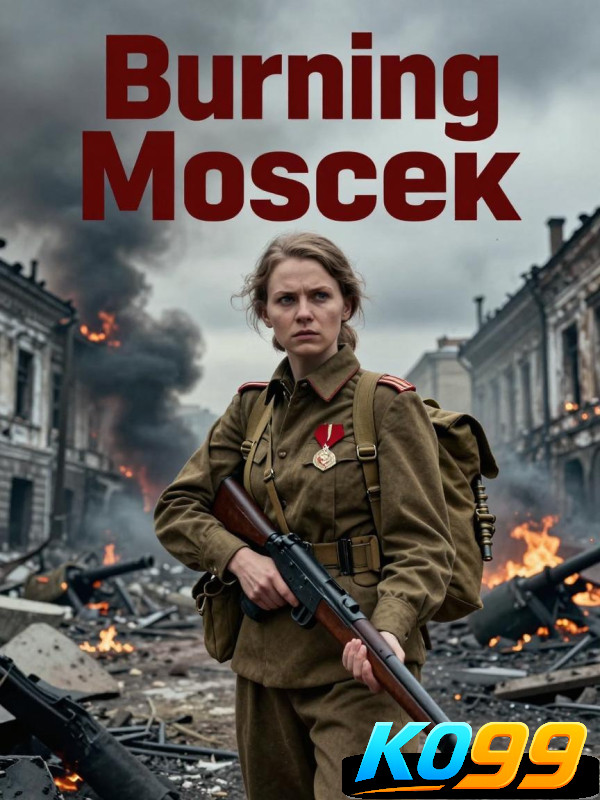
A typical time-travel novel chronicling the personal experiences of an ordinary female soldier during the Great Patriotic War.



Chapter 285: In the Besieged City (Part One) A truck was parked next to the checkpoint booth. From a distance, it looked somewhat familiar—it resembled the ride I’d hitched earlier. A ride? Why would it be stopped at the checkpoint instead of moving on? After all, the driver’s credentials were in order; the lieutenant who inspected the vehicle had let it pass immediately. Could it be that Captain Kushelev, who had come to my rescue, was the one the driver had called? The thought warmed my heart, and I silently marveled at how many good people there still are in this world. I couldn’t help but quicken my pace, eager to find the driver and ask him what was going on. Several soldiers in short leather jackets, submachine guns slung over their shoulders, had been pacing back and forth by the barrier. Upon seeing our large group approaching, they immediately snapped to attention and saluted us, simultaneously raising the barrier. I strode quickly to the truck and saw that the cab was empty. I grabbed the soldier closest to me and asked loudly, “Comrade soldier, where has the driver of this truck gone?” I was worried that the driver had been detained by the checkpoint guards for speaking up for me. “Comrade Major, please don’t get worked up. When I left just a moment ago, he was still here by his truck and hadn’t left.” ” Captain Kusherev, fearing I might lose my temper, hurried over to calm me down. Then he looked around and shouted, “Azarov, Azarov, where the hell have you run off to?” “Coming! Stop yelling, I’m on my way.” A familiar voice came from the snow-covered, mound-like dugout by the roadside. The door swung open, and a young, dark-haired soldier without a cap stepped out, muttering, “Damn Captain Kushelev, I’d just gone inside to have a cup of hot tea—the water wasn’t even boiling yet—when I heard you shouting nonstop right outside.” Hearing the captain call the driver by name, I realized his name was Azarov. Judging by the way he addressed the captain, the two clearly knew each other. It was therefore nine out of ten that Azarov had played a key role in the captain coming to my rescue. I called out his name in a friendly tone: “Azarov, hello! We meet again.” I set down the bag I was carrying and held out both hands to him. “Hello, Comrade Major. It’s a pleasure to see you again so soon.” Azarov shook my hand vigorously while whispering, “I’m an old friend of Captain Kushelev, the checkpoint commander. Do you need me to get you a pass? Otherwise, even if you make it into the city, you’ll run into trouble with the patrols. They might actually arrest you for desertion.” ” “Thanks for your kindness, but no need. I expect the people coming to pick me up will be here any minute. Thank you for your help; if it weren’t for you, I’d probably still be in a standoff with the soldiers at the checkpoint.” The captain walked over, patted the driver on the shoulder, and said, “All right, Azarov. I’ve brought Comrade Major here, and I’ll handle the rest. Listen, you’ve been here long enough. Why don’t you drive the grain to the warehouse right away? The staff there are probably getting impatient waiting for you.” The driver gave my hand another firm squeeze, then, after letting go, saluted me and said, “I’m off now, Comrade Major. Good luck.” He turned and got into the car, sat behind the wheel, waved at me, then stepped on the gas and drove off. As the car drove farther and farther away, the captain and another tall soldier walked up to me and said, “Comrade Major, this is the driver who came to pick you up. “Shall we leave now, or would you like to go inside and warm up first?” I glanced at the tall soldier, nodded and smiled at him, reached out to give him a light handshake, then replied to the captain: “Thank you for your kindness, Comrade Captain. However, the General and the Political Commissar must be getting impatient. I’d better leave right away.” “Then please get in the car, Comrade Major. ” The tall driver led me to the black sedan parked by the roadside, opened the rear door, and only after I had gotten in did he walk around to the driver’s side, get behind the wheel, and start the car. Once the car was moving, the driver handed me a manila envelope while driving and said, “Comrade Major, Political Commissar Higgins asked me to give this to you. ” I took the envelope, opened it, and found a military ID, a travel authorization, and a temporary pass inside. I opened the military ID to look at it; my rank had already been updated to Major. Since it was daytime, I kept glancing out the window at the sky. The driver noticed my unease in the rearview mirror and reminded me, “Comrade Major, once we’re inside the city, you don’t need to worry about air raids.” “Why is that?” Seeing the shattered buildings lining both sides of the road, I couldn’t help but ask. The driver sneered through gritted teeth, “Those damned fascist bandits have besieged our city, trying to wipe us out with starvation and artillery shells—that’s why they’re too stingy to drop their precious bombs on our city anymore.” ”The driver pulled up in front of a three-story marble building, then turned to me and said, “We’re here, Comrade Major. The General and the Political Commissar’s offices are on the second floor.” After thanking him, I got out of the car, carrying my luggage and weapons. As I approached the entrance, I was stopped by soldiers on duty. One of the older soldiers asked politely, “Comrade Commander, may I ask how I can be of service?” “I have been ordered to see General Shilov and Political Commissar Shikin.” “Please show me your credentials.” The soldier showed no leniency despite my higher rank, maintaining a strictly businesslike attitude. I handed him my new military ID and travel authorization. He opened them and examined them carefully, then called out toward the interior, “Comrade Lieutenant, please come out here for a moment.” Hearing that yet another lieutenant was in charge here, I couldn’t help but smile wryly. It seemed that lieutenants were the most numerous rank in the Soviet Army—their numbers even exceeded the combined total of captains and second lieutenants. The duty lieutenant ran out, took the documents from the soldier’s hand, glanced at them, and handed them back to me. At the same time, he saluted and said, “Good afternoon, Major Oshanina. General Shilov and Political Commissar Shikin have been waiting for you. My orders were to take you to see them the moment you arrived. Please follow me!” I followed the lieutenant into the building. As we made our way to the second floor, I noticed a large hole in the middle of the staircase. If the lieutenant hadn’t grabbed me just in time, I probably would have fallen through. Even so, it gave me a cold sweat. After we passed this dangerous section of the staircase, the lieutenant explained to me: “Although this building serves as the headquarters for the transport line, it didn’t escape being hit during the German artillery bombardment. The hole in the staircase was blown out by a direct hit from a German shell.” The lieutenant led me to a room at the end of the corridor. A duty officer was sitting by the door; when I saw his rank, I couldn’t help but chuckle—it turned out to be another lieutenant. The lieutenant who had brought me exchanged a few words with the guard at the door, saluted me, and then turned to leave. The lieutenant at the door whispered, “Comrade Major, please wait a moment; I’ll report to the general right away.” He immediately stood up, walked to the door, knocked softly twice, then opened the door, stood up straight outside, and reported loudly to the person inside: “Comrade General, Major Oshanina is here.” I heard someone inside say, “Please bring her in.” The lieutenant acknowledged the order, then stepped aside and gestured for me to enter. I placed the assault rifle I was carrying and the cloth bag filled with food on the table, smoothed out my uniform, and strode into the room. Almost at the same moment, I heard the lieutenant behind me quietly close the door. General Shilov saw me enter and immediately stood up, stepping out from behind his desk. I snapped to attention and saluted, reporting loudly, “Reporting, Comrade General. Major Oshaninina, commander of the anti-aircraft battalion, has arrived on orders. Please give your instructions.” General Shilov did not return the salute. Instead, he moved my hand away from my forehead, gripped it firmly, and shook it repeatedly, saying, “Major Oshaninina, welcome. Please, have a seat. Make yourself at home. There’s a stove in the room; you can take off your greatcoat.” After hanging my greatcoat and hat on the coat rack by the door, I sat down in an armchair next to the desk. After returning to his desk, Shilov picked up the phone, dialed a number, and said, “Comrade Political Commissar? Major Oshanina has arrived. Please come over immediately.” He hung up the phone, and before I could say a word, he picked up the receiver of another red telephone and began dialing. As soon as the line connected, he stood up and said solemnly, “ “Hello, Comrade Army Commander. Major Oshanina has arrived and is currently in my office.” I was secretly startled to hear him report my arrival to Khotsin. What on earth was going on that my arrival was significant enough to alert the Army Commander? After hanging up, Shilov did not sit down. Instead, he leaned slightly forward, resting both hands on the desk, and said to me: “ “It was General Khotsin, the Front Commander, who ordered you to return to the city.” “Why?” I asked, puzzled. “I’m not sure. Perhaps the Commander wants you to work at headquarters.” Hearing Shilov say this, I couldn’t help but feel a little flustered. I quickly stood up and said, “Comrade General, I don’t think headquarters work suits me. I’d rather stay at the front.” Shilov raised a hand and gave a downward gesture, signaling for me to sit down, then continued, “While we wait for the Commander and Political Commissar Shikin to arrive, could you share your views on the ice transport route with me?”