
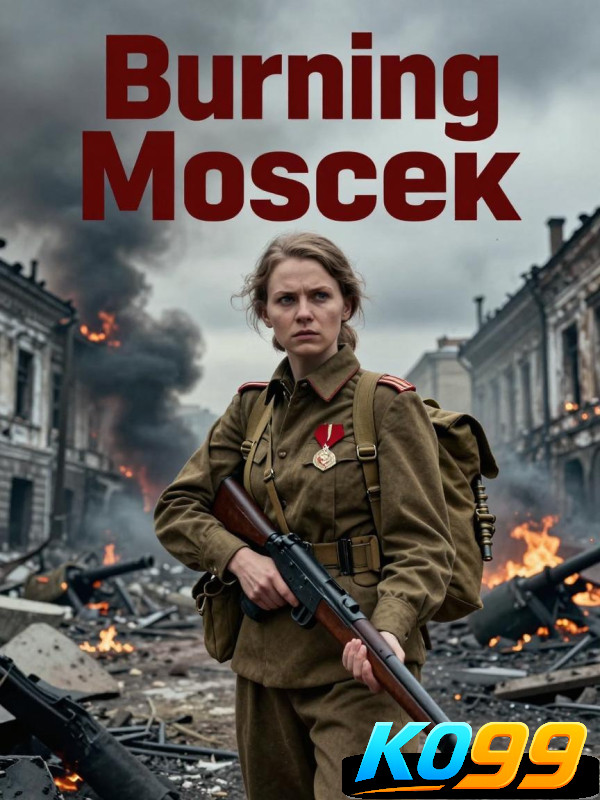
A typical time-travel novel chronicling the personal experiences of an ordinary female soldier during the Great Patriotic War.



Chapter 618: Political Commissar Obestain No sooner had I thrown my headset and microphone onto the table than Kirillov and Akhromeyev walked into the communications room. Seeing my outburst, Kirillov asked anxiously, “Comrade Division Commander, has something happened at the 1st Regiment’s positions?” Although I was furious inside, I couldn’t just lose my temper in front of Political Commissar Kirillov. I could only say angrily, “The Germans sent a small unit to attack the 1st Regiment’s positions, which was spotted by our sentries and met with warning shots. Regimental Political Commissar Obestein, who was conducting a patrol inspection at the time, immediately ordered his guard platoon to engage the enemy upon detecting the threat, while Shederikov also promptly dispatched a company to join the fight. Caught in a pincer movement, the German unit put up only brief resistance before retreating. Political Commissar Obestein has now led his troops in pursuit of the retreating Germans. ” “Nonsense, utter nonsense.” After I finished my briefing, Kirillov repeated the words with obvious displeasure: “That Major Shederikov is simply acting recklessly. Obestain isn’t a military officer—how could they let him carry out such a dangerous operation as pursuing the enemy in the dead of night? He’s only been here a short time, isn’t familiar with the terrain, and doesn’t know the regiment’s officers and soldiers well. what if they run into an enemy ambush during the pursuit? What then?” I was worried that something might happen to Obestain because I feared I wouldn’t be able to explain it to General Meretskov. After all, if he had just reported for duty in my division that very morning and an accident occurred that night, it would be hard to justify. Kirillov, on the other hand, was afraid something might happen to Obestain because he considered him a political officer—someone who might be capable of doing political work with the soldiers, but commanding combat operations was not his strong suit . I happened to glance toward the door, only to find that a crowd had gathered outside at some point. The light spilling from the communications room allowed me to make out Guard Battalion Commander Basmanov among the group. I walked to the doorway and bellowed at him, “Captain Basmanov, take the 1st Guard Company and follow me to the 1st Regiment’s positions.” With that, I turned and headed for the exit. Just as I reached the doorway, it suddenly occurred to me that I was no longer the sole decision-maker in the Independent Division ; I could no longer act on a whim as I had in the past. So I stopped in my tracks, turned to Kirillov, and said, “Comrade Political Commissar, I’m heading to the 1st Regiment’s positions. I’m leaving this place in your hands.” Then I called out to Akhromeyev, who was standing nearby looking somewhat at a loss: “Comrade Chief of Staff, what are you standing there staring at? You’re coming with me to the 1st Regiment’s positions, too.” ” After all, Basmanov had served under me for quite some time and knew my temperament well; without my having to give the order, he had already anticipated my next move when he heard the gunfire and explosions coming from the 1st Regiment’s positions. So, before I even gave the order, he had already assembled the 1st Guard Company. I stepped out of the communications room and saw that the soldiers of the Guard Company were already lined up beside the trenches. I nodded in satisfaction, then shouted to Basmanov, “Let’s go! ” At my command, Basmanov hurriedly issued orders to his men: “All units, follow my commands: Attention, about face, march!” We hadn’t gone far when Grams, Beckmann, and Gretka—who hadn’t been seen all day—came walking toward us with flashlights. Even from seven or eight paces away, Grams couldn’t wait to shout a few words, and Gretka quickly translated his words into Russian: “Comrade Division Commander, has something happened?” Although the lighting was poor at that moment, Akhromeyev, standing beside me, keenly noticed that the men were wearing German uniforms. He shouted, “Commander, watch out—there are Germans!” He immediately stepped in front of me and drew his gun, pointing it at Grams and the other two. “Captain Akhromeyev, don’t misunderstand—they’re all our own people!” Fearing he might act on impulse, I quickly grabbed his elbow, pushing it upward with all my strength, and shouted, “Put that gun down right now! Be careful not to let it go off.” Akhromeyev held his right hand, still clutching the pistol, high in the air and turned to me in confusion, saying, “ “Commander, look at them—they’re wearing German uniforms and speaking proper German. How can they not be Germans?” I released his hand and said impatiently, “Comrade Captain, put the gun down first. I’ll explain this to you later.” Then I took a few steps toward Grams and his men and called out to them, “ “You’ve arrived just in time. Let me introduce you. This is Captain Akhromeyev, the newly appointed Division Chief of Staff.” After introducing Akhromeyev to Grams and the others, I introduced Grams and his two companions to Akhromeyev: “This is former German Captain Grams, now commander of the 2nd Guard Company; Second Lieutenant Greta, Grams’s deputy, is also in the 1st Company. “And this is Captain Beckmann, commander of the 3rd Guard Company.” Upon hearing that he was the new Chief of Staff, Grams and his two men walked briskly over, raised their hands to salute him, and said politely, “Hello, Comrade Chief of Staff.” Akhromeyev was confused by the scene before him. After holstering his pistol, he raised his hand to return the salute and said with a wry smile, “Hello, it’s a pleasure to meet you all.” ” After both sides had exchanged greetings, I said to Grams, “Here’s the situation: a group of enemy troops just managed to sneak up on the 1st Company’s positions, but fortunately, our soldiers were on high alert and spotted and repelled them in time. A unit is currently pursuing them, so I’m taking the 1st Guard Company up front to assess the situation.” After listening, Grams hummed in acknowledgment and then asked, “Comrade Division Commander, should my 2nd Company accompany you as well?” I waved my hand and said, “No need. The fighting up ahead is nearly over; the 1st Company accompanying me will suffice. You should go back and rest. Report to my command post after dawn tomorrow; I have matters to discuss with you.” Hearing this, the three of them did not press the issue. After all, the German army was the most disciplined force. They saluted me and Akhromeyev, then turned and headed back along the same path. On the way to the 1st Regiment’s positions, Akhromeyev asked me in confusion: “ “Comrade Division Commander, I don’t understand—why are there Germans in our division? What is their background?” I thought of the many soldiers following behind us; some things were not appropriate to say in such a setting, so I could only give a vague answer: “They are German officers and soldiers who have defected to us. For now, I have assigned them to the guard battalion.” " “Can we trust them?” Akhromeyev asked cautiously; it seemed everyone harbored suspicions toward Grams and his men. I replied calmly, “Don’t worry, Comrade Captain. A few days ago, the garrison on Hill 107. 5 to the left of Mamayev Ridge withdrew without authorization from their superiors, and as a result, the Germans occupied the position. At that time, the 3rd and 4th Regiments were passing nearby. Upon hearing that the Germans had taken our position, they took the initiative to launch an attack on the hill. Because the terrain on the southern slope was unfavorable to us, several attacks launched by the 3rd and 4th Regiments ended in failure, and even the commander of the 3rd Regiment, Lieutenant Colonel Kosga, was wounded. Later, I dispatched the commander of the 5th Regiment, Lieutenant Colonel Oleg, along with Captain Grams’s unit. Disguised as German reinforcements, they strode boldly up the northern slope to the summit and, without hesitation, opened fire, eliminating every enemy holding the position.” “They fired on their own men?” Akhromeyev asked, sounding a bit uncertain. “Yes, they opened fire, and they wiped out every single German on the position.” As I said this, Akhromeyev found it even harder to believe: “That can’t be, Comrade Division Commander. I believe the Germans surrendered to us; but as for Germans who joined our side opening fire on their former comrades—I find that impossible. After all, their training would never allow them to point a gun at their own comrades, even former ones.” ” Hearing Akhromeyev say this, I simply shrugged and didn’t continue the discussion with him on this matter. In truth, whether the surrendering German troops ever fired on their former comrades is something only those directly involved would know. In any case, from a TV series produced by Germans in later years, I learned that among the five people sent by the Red Army to carry out special missions in German-occupied territory, aside from one Soviet national, one Pole, the remaining three were former German officers and soldiers, and they showed absolutely no mercy toward their compatriots while carrying out their mission. To avoid getting bogged down in this topic any further, I turned to Askharomeyev and asked, “Comrade Captain, what is the background of Political Instructor Oberstein, who came with you?” Askharomeyev hadn’t expected my train of thought to shift so quickly; he took several steps forward before catching up with my line of reasoning, hurriedly saying, “Reporting to the Division Commander, Comrade Obestain was personally assigned to us by Comrade General before we departed. I asked him about it later; he used to serve as a company political officer in a company of the 19th Guards Infantry Division. He was wounded during the Battle of Sinyavino and sent to the military hospital; he joined us on our way to Stalingrad shortly after being discharged.” “The 19th Guards Infantry Division.” I repeated this familiar unit designation, a smile spreading across my face. “I recall that during the Battle of Synyavino, this unit captured a railway station heavily defended by German forces. Comrade Obestain comes from a heroic unit; it seems he’s quite a remarkable man.” At that moment, I felt a sudden sense of reassurance; it seemed I’d been worrying needlessly. A political officer who had been wounded in battle must possess exceptional abilities to have been selected by Meretskov and assigned to the second lieutenant training squad as an instructor. By the time we reached the 1st Regiment’s positions, the gunfire had completely died down. Standing in the position halfway up the mountain, I watched the troops who had just cleared the battlefield, holding torches as they made their way up the slope. By the light of the torches, I could make out two men at the very front, chatting and laughing. One was Shederikov, and the other was Obestain. Seeing that the two had walked quite close to me without noticing my presence, I called out to them loudly: “ “Lieutenant Colonel Shejerikov, Political Commissar Obestain, welcome home in triumph!” Hearing my voice, the two finally noticed that I was standing in the trench with Akhromeyev and Basmanov. They hurried over to me, saluted, and Shejerikov asked in surprise, “Hello, Comrade Division Commander. How did you end up at the front lines?” I didn’t answer his question but said instead, “You two come down into the trench first. Standing up there so high, you have to crane your necks just to talk to me—isn’t that tiring?” Hearing my order, the two men didn’t dare delay; they quickly jumped into the trench, stood at attention before me, and waited for my address. In the light of the torch, I looked them up and down, noticing that although their faces were blackened by gunpowder smoke, they wore expressions of joy, proving that the recent battle had ended in victory. So I asked curiously, “Comrade Sherikhov, what about the Germans who came to raid our position?” “We took them all out.” As soon as Sherikhov finished speaking, he realized his phrasing might not have been quite accurate, and quickly added, “ “To be precise, Political Commissar Oberstein led the troops and wiped them all out.” “What are our casualties?” Since the German raiders had been completely wiped out, before asking about our military achievements, I first inquired about our own casualties. “Reporting to the Division Commander,” Oberstein stepped forward and reported: “We suffered 7 killed and 15 wounded. We killed 47 Germans and captured 2 pistols, 7 submachine guns, and 38 rifles.” Hearing such a lopsided ratio of enemy to friendly casualties, and that we’d captured so much, I couldn’t help but beam with joy. Curiosity got the better of me, and I asked, “ “To have eliminated so many enemies while suffering such minimal casualties is truly incredible. Tell me, how did you manage that?” Oberstein nudged Shejerikov with his arm and gave him a look, signaling for him to report on the matter. Seeing his political commissar’s gesture, Shejerikov did not hesitate and explained the full story of the battle to me: “The Germans who came to ambush us had just secured their position halfway up the hillside when they were spotted by a sentry on duty, who decisively fired a warning shot. At that very moment, Comrade Political Commissar was conducting a patrol inspection nearby with a platoon of guard soldiers. Upon hearing the gunfire, he also spotted the Germans approaching our positions and immediately ordered the guard platoon to open fire. I was studying the map at the regiment headquarters at the time. Upon hearing the gunfire and the explosions of grenades, I suspected it might be a German ambush, so I promptly contacted the 1st Company at the front line by telephone, ordering the company commander to deploy a platoon to engage the attacking enemy head-on, and for the remaining two platoons to quietly slip out of our positions, circle around the Germans from west to east, and deal them a crushing blow. The Germans did not expect that their ambush had just been discovered and that they would be caught in a pincer movement. After a brief skirmish, they hastily retreated. Seeing that the enemy was fleeing, Comrade Political Commissar led the troops on the position to give chase. The fleeing enemy had barely reached the foot of the mountain when they were intercepted by the platoon I had stationed there, catching them off guard once again. At that moment, the troops led by the Political Commissar also charged down from the mid-slope positions, completely encircling the enemy force. By the time I arrived with the guard company, the battle was nearing its end. Because the Political Commissar’s men had fought so fiercely, the remaining Germans didn’t even have time to raise their hands in surrender— they were all wiped out.” “Well done, Comrade Oberstein.” After listening to Xie Jierikov’s report, I gave Oberstein a thumbs-up and sincerely praised him: “You did a great job—truly well done!” Oberstein smiled shyly and said to me, “Comrade Division Commander, I am very grateful that you assigned me to the 1st Regiment to serve as its political commissar. As far as I know, the 1st Regiment is the most combat-effective unit in the entire Independent Division, and its commander, Lieutenant Colonel Xie Jierikof, is a highly decorated commander. I am deeply moved to have been assigned to serve as political commissar in such a heroic regiment. When I arrived, I secretly resolved to humbly learn from this brave regiment commander in the heat of battle.” “Comrade Political Commissar, you flatter me.” Obestain’s praise made Xie Jierikof feel a bit embarrassed. He said to me, “Comrade Division Commander, you may not know this, but as soon as Political Commissar Obestain arrived at the regiment, he took the initiative to ask me how to conduct political and ideological work. He said that aside from motivating the officers and soldiers during combat, ‘In peacetime, especially at night, the soldiers are more willing to open up. The political commissar can seize this opportunity to have one-on-one conversations with them and reach deep into their souls.’ At this point, he turned his head to glance behind him, then ordered, ‘Someone, bring the political commissar’s small leather case over here.’ As soon as he gave the order, a soldier quickly walked into our midst, holding a small leather case. Shejerikov opened the lid of the case and, pointing inside, said to me, “Comrade Division Commander, please look. In addition to propaganda pamphlets and books, the case also contains games like checkers and dominoes.” The Political Commissar said that the purpose of his heart-to-heart talks and recreational activities with the soldiers is to ensure they are no longer driven by fear in battle, but rather to help them understand that they must overcome suffering through their own political consciousness.” Although I didn’t fully grasp what Shejerikov was saying, I knew deep down that assigning Obestain to the 1st Regiment as political commissar was the best decision I’d ever made. At the very least, with these political officers on board, the unit’s combat effectiveness would be boosted to varying degrees. With that in mind, I took two steps forward, raised my hands, and gently patted Obestain on the upper arm, saying warmly, “Well done, Comrade Obestain. I am confident that with you and the other political officers joining the 1st Regiment, the unit’s overall combat effectiveness will reach a new level.” Hearing my praise, Obestain stood up straight and replied with a neutral expression, “I am willing to serve the Soviet Motherland!” Considering that the First Regiment had only a handful of political officers, I realized that if they were to conduct one-on-one private conversations with the soldiers, they would likely have no time to rest. So I asked with concern, “Comrade Obestain, do you have enough staff under your command?” Oberstein shook his head and said slowly, “Reporting to the Division Commander, to effectively carry out one-on-one heart-to-heart talks with the soldiers, we need at least three political officers per company. But as you know, including myself, there are only four political officers in the entire regiment—that is far from enough.” ” His words left me at a loss. I had previously had no interest in political officers and was deeply afraid that someone would force a few on me, so whenever I could pass the responsibility on, I did so without hesitation. I never expected that my mindset would change—just as I was planning to recruit more political officers to bolster the unit, I discovered it was simply impossible to transfer enough personnel from other units. After pacing back and forth in the trench with my hands behind my back, I finally came up with a compromise. I said to Xie Jierikof and Obestain, “I can provide you with additional troops and weapons, but as for political officers, I really can’t help you there. So the only solution now is for you to select suitable personnel from within the regiment and provide them with the necessary training, so they can become qualified political officers as quickly as possible.” Hearing this, a look of delight spread across Obestain’s face, and he immediately replied in a loud voice, “Understood, Comrade Division Commander. I’ll get started on this tomorrow.” Seeing that Sheyrikov remained silent, I assumed he was reluctant. After all, having come from a disciplinary battalion, he shared my innate aversion to political officers. So I quickly ordered him, “Comrade Lieutenant Colonel, I am ordering you to accompany the Political Commissar to each company tomorrow to select personnel. Do you understand?” To my surprise, Sheyrikov also agreed readily: “Yes, Comrade Division Commander. I guarantee I will complete the task.”