
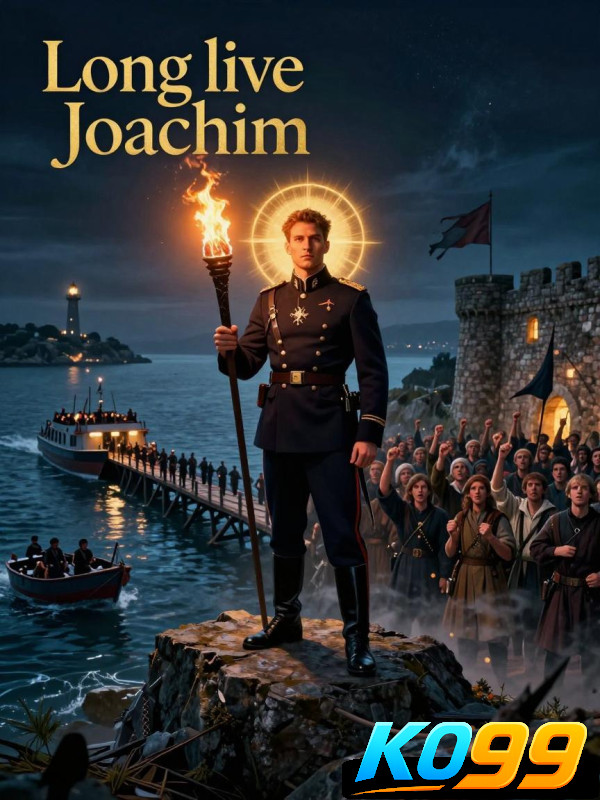
He traveled back in time to Germany over a century ago, where he carved out a place for himself through wisdom, insight, diligence, and perseverance. He pioneered amphibious landing tactics and conquered small European island nations; with extraordinary courage and determination, he climbed step by step to the pinnacle of his life. Crowned with the sacred aura of a savior, he listened to the cheers of the masses: “Long live Joachim!”



Chapter 128: Amphibious Storm (middle) At sunrise, the Shandewych Coast located on the eastern side of the northern end of Sud Island was filled with intense gunfire, and on the sea about 3 kilometers away from the coast, a large torpedo boat numbered T-111, a 1898 grade torpedo boat, had been cruising at a medium low speed of about 10 knots for a long time. In addition to the original crew, a group of officers from the Marine Corps were also carried on this old-fashioned light ship with slightly inferior seaworthiness. Among this group of officers, the leader is Colonel Jon Weitmann, who recently celebrated his 43rd birthday. He is the commander of the 5th Naval Infantry Regiment of the 2nd Marine Brigade of Germany and a recipient of the Third Class Military Merit Medal, Third Class Red Eagle Medal, and First Class Iron Cross Medal. Among the first batch of naval infantry to land in Sandwich, one company belonged to Colonel Weitmann's 5th Naval Infantry Regiment. According to the complete combat plan, the regiment will also have five companies landing in the morning of that day, which means that half of the regiment's troops will be included in the first attack wave on Sudetenland. In this situation, Colonel Weitmann stationed his regiment command on the nearest light warship to the coast, which could not only grasp the situation in the first time, but also coordinate the firepower of the warship to provide support in a timely manner. In order to better observe the battle on shore, officers of the Navy Infantry Division installed a pair of artillery mirrors on the ship's side deck. Fortunately, the sea conditions were unusually calm at this time, otherwise, with the anti wind and wave ability of this 500 ton ship, the artillery mirrors would not be useful at all. Not good, the British artillery hit one of our Humbert tanks, it must have been damaged. I saw some crew members withdraw from the tank, but the British artillery was well concealed, and I couldn't find its trace. I didn't see any flames, "the lieutenant operating the artillery mirror reported his observations to his colleagues in a barrage. Let me take a look Colonel Weitmann, who was standing next to him, took advantage of the situation and pushed away the lieutenant. His surname currently has no connection with the armored ace, mainly because the German Navy's tank troops are still in the "invincible" stage - countries such as Britain, France, and Russia have not yet developed and equipped similar tracked tanks, and rarely use wheeled armored vehicles in a centralized manner. The main function of the German style Hubert tank is to break through enemy positions, so there is no such thing as an ace. However, Colonel Weitmann himself was a rising star in the naval world. He participated in the Battle of Amiens, the Battle of the Vaz River, and the Battle of Flanders, and made numerous military achievements with his flexible and versatile combat strategies. He also demonstrated superb military management skills, which earned him praise from superiors. However, due to his limited experience, he has not yet entered the ranks of generals, but it is only a matter of time. The British army uses light artillery with a diameter of about 50 millimeters, with a relatively high aim and definitely not far away... There is a house on the north side of the road parallel to the coast, with a white exterior wall, which is likely behind that house... Hans, please ask Captain Schalke to fire 25 degrees northwest of the white wall house north of the road as the target, and try firing a few shells first The combat bridge of a large torpedo boat in 1898 had a narrow space and couldn't accommodate too many people, so Weitmann only sent one officer under his command to stay on the bridge to coordinate and contact. He stood by the hatch next to the bridge and heard the colonel's instructions, quickly entering the combat bridge. After a moment, the gunners of the three main guns on board received the firing instructions from the captain through the loudspeaker. They adjusted the firing elements in less than half a minute, accompanied by the sound of "pay attention to firing". The 35 caliber 88mm naval gun made a powerful roar, and the boat trembled slightly. The scene in the mirror of the artillery team was instantly blurred, but the time the shells flew was enough for the deck to stabilize again. Very accurate, very precise! "Colonel Weisman whispered as he adjusted the artillery mirror slightly. Seeing the impact point close to the target, the gunners on board did not need to adjust the shooting data and directly fired the second and third rounds of artillery fire. From receiving the shooting order to completing the three rounds, the duration did not exceed one and a half minutes, and the efficiency far exceeded that of the German Army's field artillery. The sound of gunfire from nearby stopped for a while, and the colonel's gaze shifted away from the artillery mirror. He turned to his liaison officer and shouted, "Tell the captain that these few shots are very beautiful, and the target should be killed The officer immediately crawled into the bridge, while Colonel Weitmann picked up the binoculars hanging from his chest. The ships transporting the first batch of landing troops are returning to the fleet from the beach, and they meet the second batch of ships four or five kilometers offshore. In contrast, the second batch of boats had much fewer numbers and were mostly powered by sampans and rubber boats. They had a slow speed, weaker load-bearing capacity, and no resistance to enemy fire. This scene made Weitman feel powerless. Although the German Marine Corps was established at the regimental level or above much later than established maritime empires such as Britain, with the support of some members of the royal family and senior naval officers, the training and equipment levels of the German naval infantry have shown a trend of catching up from behind. Moreover, the performance and quality of several landing ships deployed by the German Navy are very good. Therefore, the landing operations carried out in Flanders can be regarded as a classic example of amphibious landing operations in the 20th century, except for a slightly smaller scale. At that time, most of the soldiers under Weitman's command landed on regular landing boats or light speedboats, and the scene looked pleasing to the eye. Of course, the Belgian coast is only 200 nautical miles away from the German mainland, and the distance from the German mainland to the Faroe Islands is at least four times longer. There is no technical difficulty in transporting a large number of landing craft to the Faroe Islands, but the key is time. Since the theater command is determined to launch a landing attack at this time, the current situation will inevitably arise. I hope everything goes smoothly... Colonel Weitmann thought to himself. On Sud Island, north of the Sandwich Coast, more than 600 German troops have landed. They have built a beachhead defense line in platoons, mainly consisting of trenches dug by the British army. After repelling the first British counterattack with the support of light and heavy machine guns, grenades, and naval guns, except for two sharp knife platoons attempting to capture the high ground on the north side, the remaining troops stayed behind to stabilize the landing site. Three Hubert-13 tanks brought ashore by heavy landing craft were destroyed, one of which was destroyed. The other two tanks also "drilled" into trenches, with their bodies hidden on the tank positions dug out by naval infantry on the basis of British trenches, leaving only the rotating turrets outside. It was difficult for British artillery to hit targets the size of the turrets, but once the war required it, the two tanks could quickly leave their positions to support naval infantry in attacking or implementing tactical counterattacks. Under the special attention of the light cruiser "K ö ln" and the 1906 torpedo boats S-175 and V-186, the high ground north of the German landing position had already been cleared twice by intensive artillery fire without leaving any dead corners. Therefore, when the soldiers of the 5th Naval Infantry Regiment gasped for breath and climbed up this mountain ridge with an average altitude of nearly 200 meters, the British army had already abandoned their position, leaving only the ground covered in broken limbs, arms, and some damaged weapons. Due to the lack of artillery, the German soldiers occupying the high ground were unable to use the height advantage here to attack and suppress the British troops in the lower areas. From here, the perspective of the battlefield was not as good as that of reconnaissance planes hovering over the battlefield. Their role seemed to be only to support the stormtroopers climbing up the northern cliff. However, the high ground on the north side fell into the hands of the German army, which was a significant psychological blow to the British officers and soldiers who gritted their teeth and defended their positions in Shandeweiqi Port and the west side. Even if the German reconnaissance planes left the battlefield, their every move was in the eyes of the Germans. Moreover, it was not difficult to dismantle one or two mountain guns weighing hundreds of kilograms and carry them onto the mountain beams. Once the German guns were in place, the depression between the two mountain beams would be placed at the bottom of the German gun barrels, which was actually a more powerful deterrent than naval guns. However, the British army not only lacked the ability to retake the high ground, but also found it very difficult to defend their existing positions. Looking at the densely packed German warships on the sea, the British commander stationed on the coast of Sandwich sent an almost desperate telegram to his superiors - unfortunately, the German army captured the British codebook in the Battle of Wog Island. In just over a week, the British troops stationed on Sudetenland had not yet received the new communication password, so the contents of this telegram were quickly presented to the German commander. To Sir Grierson: Our unit was shelled by the German fleet at 7:30 am this morning, and we later discovered an attempt by the German army to land. Our officers and soldiers tenaciously defended their positions and launched a counterattack against the enemy landing. Unfortunately, the strength was vastly different, and the northern position and the No. 1 highland had all been lost, with over a thousand casualties and only three available artillery pieces. Considering the continuous influx of German landing forces and the complete control of the nearby waters by the German fleet, as well as the repeated bombings by German planes, it is estimated that our troops can still hold their ground for two hours. If the remaining officers and soldiers retreat to Kvarba under German artillery fire, the losses will be severe. At that time, I will allow those who have lost their combat effectiveness to surrender to the German army. Glory belongs to Great Britain... Colonel Michael Townsend saluted. Looking at the deciphered British telegram, Xia Shu's face showed no signs of joy. He stood quietly in front of the porthole, watching a group of landing craft in an empty state sail from the newly arrived fleet in the Faroe Islands towards the direction of Little Dipper Island. It takes four days and nights of turbulence to sail from the German mainland to this point. Although naval infantry are familiar with water and often take boats, they still consume a lot of energy during such a long journey. Even if they are psychologically fearless, their bodies are not in the best condition. However, the landing craft carried by this fleet does not have such concerns. As long as the fuel tank is filled with fuel and the mechanical components are inspected at the most basic level, they can be put into battle under the control of the pilot, thus making up for the shortage of landing ships. Soon, the communication officer on board knocked on the door and handed a report to Lieutenant General Fleisch von Main. The former commander of the Danzig Base garrison has now become the commander of the 2nd Marine Brigade and has been temporarily appointed as the commander-in-chief of the Faroe Islands Theater Marine Corps to assist Xia Shu in carrying out this amphibious landing operation. After reading the report, Major General Maine turned around and said to Xia Shu from a distance of more than ten steps, "Your Highness, our reconnaissance plane has sent a report that a British unit has been discovered north of Kvarba, with a size of about one regiment, which should be coming to reinforce Sandwich Xia Shu snorted coldly and said, "If this is Grilson's decision, then I can only say that this old opponent has not made any progress. Does he think that he can cover the support troops entering the battlefield with submarines, torpedo boats, and a few naval guns dismantled from battleships? That's too foolish Although the British Marine Corps once fought a beautiful battle in the Abbeville area downstream of the Somme River, they were later beaten to pieces by the German Marine Corps in Amiens. Therefore, Major General Mein disdainfully said, "Since modern times, the British army's performance in land warfare has been much worse than in sea warfare. In the United States, they were beaten to ashes by militias, and in Europe, they were beaten to pieces by Napoleon. Speaking of which, the key to the victory of the Duke of Wellington still owes to the Prussian army. I think that compared to pragmatic and professional naval commanders, British land commanders are too idealistic in their minds, or rather, arrogance has blinded their eyes, making it difficult for them to see the situation in front of them. The sentence is: