
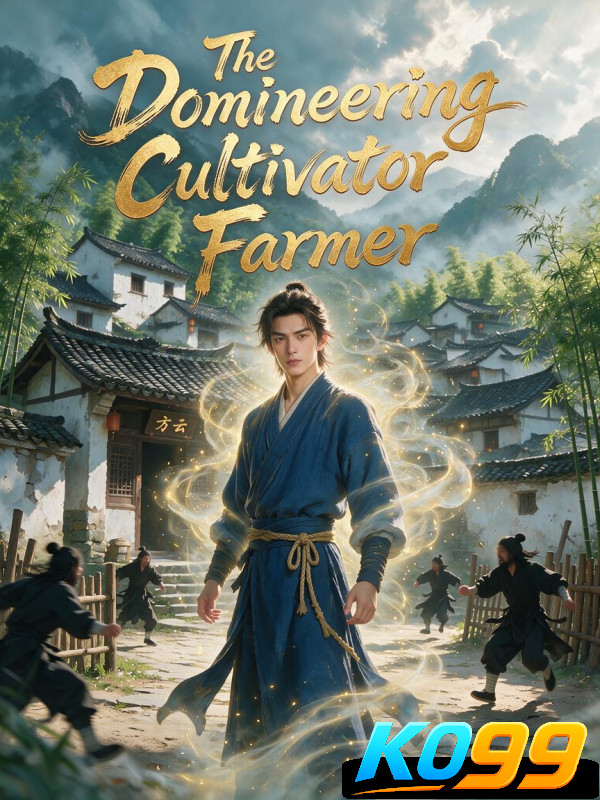
After discovering a cultivator's hidden cave residence, Fang Yun becomes the last known cultivator on Earth. Despite gaining unusual abilities, he has little interest in leaving his family behind to chase glory. Instead, he returns home, spends time with the people he cares about, and helps develop his quiet mountain village. The village's unexpected prosperity soon attracts visitors, investors, and opportunists with very different motives. Fang Yun tries to protect the community without turning every problem into a confrontation, balancing cultivation with farming, family life, and the challenge of keeping a peaceful place peaceful.


Chapter 37: The Rise of Traditional Chinese Medicine
Public reaction in China to the papers published by the TCM community has been mixed. Some are jubilant, some are indifferent, and still others go so far as to claim that TCM is merely making a last-ditch struggle before its decline. Online, a heated debate erupted. The vast majority of netizens expressed great anticipation for the rise of TCM, while a small handful of troublemakers were instantly drowned out by a deluge of criticism the moment they posted comments disparaging TCM. Three days later, at the First Affiliated Hospital of Beijing University of Traditional Chinese Medicine, an on-site consultation event led by a team of TCM experts took place as scheduled. Medical professionals from various countries and journalists from both China and abroad packed the vast conference hall—which had been specially arranged for the event—to capacity. China’s health authorities attached great importance to this event and had specially arranged for CCTV to film it in preparation for a nationwide live broadcast; many overseas Chinese also gathered in front of their computers to watch the live stream. As the crowd waited with bated breath, a group of experts led by Professor Meng filed in one after another. “I am Meng Ran, the head of this consultation. Welcome, everyone, to witness the wonders of Traditional Chinese Medicine. I guarantee that your visit will be well worth it. Now, before we begin, if you have any questions, I’d be happy to answer a few.” As soon as he took his seat, Professor Meng spoke confidently to the packed hall. “Professor Meng, the Fang Family Five Elements Therapy sounds like a medical technique passed down by the Fang family. Why is it that, after searching through all of Huaxia’s documented medical history, I haven’t found a single famous physician surnamed Fang?” A Huaxia reporter was the first to raise his hand and ask a question, cutting straight to the origin of the Five Elements Therapy. “He was a true master of traditional Chinese medicine. His medical skills were arguably the finest in the world, and his magnanimity was vast enough to encompass heaven and earth. Compared to him, we are like toddlers just learning to walk.” Whenever Professor Meng spoke of Fang Yun, his face lit up with admiration. Impressed by Fang Yun’s magnanimity, the group of experts unanimously decided to honor him with the title of “Master” and to refer to the Five Elements Therapy as the Fang Family Five Elements Therapy. “Could it be that the founder of the Fang School of Five Elements Therapy is actually a modern-day person? And that he personally taught you all? I’ve never heard of any senior TCM practitioner in modern times being called ‘Master Fang,’” another Chinese reporter, picking up on the subtext in Professor Meng’s words, quickly raised his hand to ask. “Master Fang is only twenty-nine years old this year, and he doesn’t care about such empty titles at all. If it weren’t for the fact that our country’s former leader happened to witness him curing a patient with late-stage cancer in just over ten minutes—and personally intervened to ask him to teach us his medical techniques—we wouldn’t even have known that Huaxia had such a highly skilled medical genius.” Professor Meng’s words immediately caused a stir throughout the room; no one had expected that the master of traditional Chinese medicine he was so highly praising was only twenty-nine years old. After all, every highly skilled doctor has reached their current level only after decades of accumulating technical skills and experience. Moreover, for a group of TCM experts to call him a “master,” just how exceptional must his medical skills be? A French reporter stood up and asked, “Is everything you stated in your paper true? How could TCM possibly be effective against terminal illnesses that even Western medicine has been unable to treat—let alone produce the ‘remarkable results’ you claim? After all, it’s common knowledge that TCM takes time to show results and is both time-consuming and labor-intensive.” In response to the French reporter’s pointed question, Professor Meng simply replied calmly, “Whether TCM can cure terminal illnesses that Western medicine has given up on, and whether the results are significant—you’ll be able to witness that for yourself shortly.” “If there are no further questions, we’ll proceed with the on-site diagnosis and treatment right away.” As soon as Professor Meng finished speaking, twenty carefully selected patients filed in one after another, with one expert assigned to each patient. To ensure the resurgence of TCM and make a spectacular debut, these patients—all suffering from the most severe conditions—had been handpicked from around the world. “Please take a look at the patients’ medical records first and confirm the authenticity of their conditions together.” Right from the start, Professor Meng had the Western medical professionals in attendance—both domestic and international—examine the patients’ conditions, to prevent anyone from later claiming that TCM was engaging in fraud. “That’s not necessary. We brought these patients ourselves, and we’re very familiar with their conditions.” The attendees were all renowned doctors and professors from various countries. Since these patients were able to travel to China for treatment, they came from families with sufficient financial means. They had all specifically sought diagnosis and treatment from these experts in their home countries, so their conditions were well understood. “Very well, let’s begin.” Professor Meng said no more. At his signal, all the experts approached the patients under their care and began their examinations. The future of traditional Chinese medicine hinged on this moment. If they botched it, everything would be over—no one would ever trust TCM again. So everyone was on high alert, channeling their qi into the patients’ bodies as if it were free, striving for the best possible results. Half an hour later, they all stopped and had the medical staff escort the patients for examinations. When the test results came in and were compared with the patients’ previous reports, the entire hall erupted in astonishment. More than half of the twenty patients had recovered; only a few with the most severe conditions required further rest. Even the most critically ill cancer patient had seen more than half of the malignant tumor disappear from their body—didn’t that mean another round of treatment would lead to a full recovery? “Oh my God, I just can’t believe it.” “Miraculous China, miraculous traditional Chinese medicine.” Ignoring the Western doctors’ grim expressions, the crowd of reporters in the hall began shouting in unison. These reporters were seasoned professionals. Although they couldn’t decipher the medical reports, they knew from the Western doctors’ reactions that everything was true. They were instantly thrilled—what a huge news story this was! Some had even come up with headlines already, such as: “Miraculous Traditional Chinese Medicine Conquers All Incurable Diseases That Western Medicine Could Not Treat.” After answering the questions one by one from the reporters—who were practically frantic with excitement—Professor Meng announced that the diagnostic session was now over. “Wait a minute.” Before Professor Meng had even finished speaking, a reporter from South Korea stood up and interrupted him. Upon seeing that it was a reporter from Korea, a flash of disgust crossed Professor Meng’s eyes. As a veteran Chinese traditional medicine practitioner, Professor Meng harbored little regard for the Koreans—who shamelessly claimed the achievements of Chinese medicine as their own, renamed it “Korean medicine,” and even applied for international recognition as cultural heritage. However, his good manners prompted Professor Meng to gesture for him to ask his question. The South Korean reporter stood up and said arrogantly, “As everyone knows, our great South Korea is the true heir to Korean medicine; you Chinese are merely learning from us. The Master Fang you speak of must be a South Korean, or else he stole our medical achievements. We demand that you return the Fang Family Five Elements Therapy to us.” “Bullshit!” Professor Meng, who was usually so refined, couldn’t help but let a curse slip. He’d seen shameless people before, but never anyone this shameless. The poor old man had never cursed in his entire life; after uttering just that one word, “bullshit,” he was so enraged that he began trembling all over and couldn’t speak another word. One of Professor Meng’s assistants standing nearby stood up and snorted coldly. “Hmph, I don’t know if your ‘Stick Country’ is great or not, but your thick-skinnedness could easily cover the entire universe—there’s simply no room left in this world for your faces.” “Great! Well said!” The Chinese people in the audience—and even many foreigners—began applauding and cheering. Fang Yun, who had been following the event closely, was watching the live broadcast on CCTV at that moment. Seeing this, he was so furious he felt like his lungs were about to burst. Regardless of the fact that Professor Meng was on air, he grabbed his phone and dialed Professor Meng’s number. “Hello. Ah, it’s Master Fang. What did you say? All right, all right, I’ll do exactly as you say right away.” After hanging up, Professor Meng wore a smug smile of vindication as he repeated Fang Yun’s instructions word for word. “Master Fang is extremely outraged by these shameless remarks from the Land of the Morning Calm. He has decreed that from now on, no TCM practitioner studying the Five Elements Therapy is to treat patients from the Land of the Morning Calm. Anyone who violates this order will have their medical skills personally stripped by him.” As soon as Professor Meng finished speaking, the South Korean reporter turned pale as a sheet and collapsed to the ground. He was finished. If people back home found out that, because of his shameless remarks, Chinese traditional medicine would henceforth refuse to treat terminally ill patients, the enraged public would surely tear him to pieces. Watching the South Korean reporter collapse to the ground, everyone present wore expressions of schadenfreude; they truly had no regard for these South Koreans who even claimed to have created the universe. After the medical treatment event concluded, countless Chinese people set off firecrackers in celebration. The entire nation was immersed in a sea of joy, and at that moment, everyone’s hearts were filled with pride. When reporters transmitted the results of the TCM treatments back to their respective countries, the entire world was sent into a frenzy. All those suffering from illnesses rushed to the TCM clinics set up by Chinese nationals in their host countries, resulting in long lines snaking out the doors of every clinic run by Chinese practitioners. Media outlets abroad also published a deluge of commentary on TCM in newspapers and magazines, with many exclaiming, “The wolf is coming!” Some newspapers even used the headline, “Once TCM Emerges, Who Can Rival It?” to promote it extensively. At that moment, the eyes of the entire world turned to TCM, and at that moment, TCM rose to prominence.