
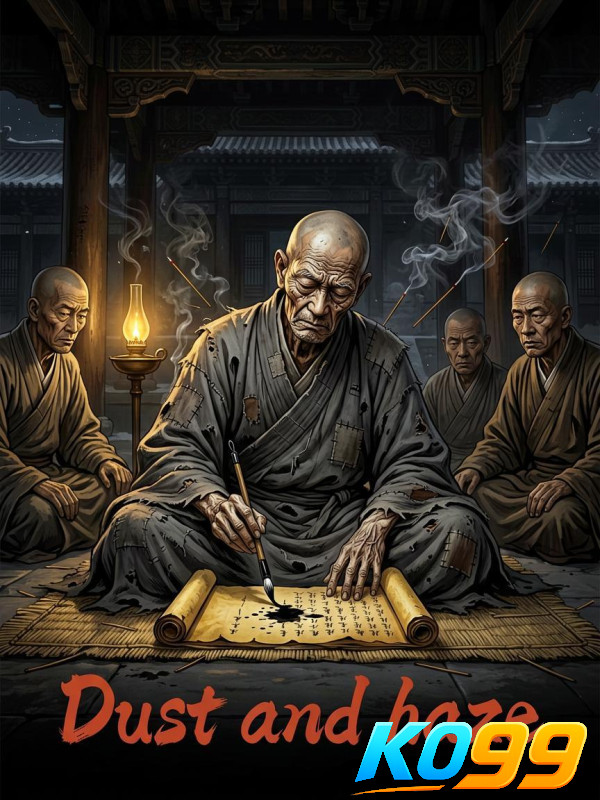
On the winter night of the twelve years of the reign of the emperor Kangxi Emperor of the Qing Dynasty, the sandalwood in the hall curled up, and in the chanting, a thin old monk sat on the top of the futon, and the calligraphy said: "the sky is broken, and the ground is broken, so you will miss it if you recognize it as a burden, and who dares to sit if you have broken your tongue." after writing, you can see the monks for a long time, and finally shake your head and sigh, but you throw a pen and die.



On the winter night of the twelve years of the reign of the emperor Kangxi Emperor of the Qing Dynasty, the sandalwood in the hall curled up, and in the chanting, a thin old monk sat on the top of the futon, and the calligraphy said: "the sky is broken, and the ground is broken, so you will miss it if you recognize it as a burden, and who dares to sit if you have broken your tongue." after writing, you can see the monks for a long time, and finally shake your head and sigh, but you throw a pen and die.
Chapter 1: Mo Can Wedge In the winter night of the twelve years of emperor Kangxi Emperor of the Qing Dynasty (AD 1,673), the Gantong temple under the Shengying peak in Cangshan, Dali point was covered with a thin layer of snow, and the weather was particularly cold. In the early morning, the sandalwood in the hall curls up, and in the chanting sound, a thin old monk sits on the top of the futon, and the calligraphy says: the sky is broken, and the ground is broken, so it's missed to recognize the responsibility, and who dares to sit when the tongue is broken. After writing, he watched the monks for a long time, and finally shook his head and sighed, but the pen was thrown away. The name of the old monk is Puhe, and the world is known as the "bear monk". For more than 100 years, no one can understand this verse Text: Cangshan mountain in Dali point was called lingjiu mountain in ancient times. Between Shengying peak and the peak of Buddha, there is a clear stream winding through the dark pine forest, bypassing the village and flowing eastward into Erhai lake. The village is called mojiayi, and there are about ten Bai families. Most of them live by hunting. Occasionally, they send their prey to Dali city for some firewood, oil and salt. Although they live a poor life, they are comfortable. There is a shabby courtyard with three lanes and one screen wall by the stream, with white walls and grey tiles. There are several clusters of weeds scattered on the eaves. The owner's name is Mo Wenli. He has been blind since he was a child. He relies on his relatives and neighbors to help him survive. When he is in a bad year, he often goes out to beg. Until he was more than 40 years old, he met Su Niang, a Han woman from other villages who was refugees in Dali city. He brought her back to the village and finally became a family. At the beginning, I heard the villagers saying that Su Niang looks ugly. Lao Mo thought that it's good for a blind man to have someone to follow him. Anyway, he can't see it. It's just the same to look good. Su Niang is very capable. Not long ago, he opened up a small piece of wasteland behind the house, planted vegetables, raised a few chickens and a little piggy, and his life gradually has a head. In the spring of the second year, his wife was pregnant with a child. When he was middle-aged, he was very happy, but he was always nervous. After autumn and winter, it's time to give birth. The midwife's grandmother was busy in the house, and Mo was standing at the gate of the hospital waiting anxiously with a stick. For a long time, he finally heard the cry when the baby was born. "It's a boy, Lao Mo," grandma pushed the door out, full of joy, "the child's eyes are... Good." Lao Mo was shocked when he heard the speech, and tears came out of his withered eyes. At that time, my grandfather was a famous hunter in this area. He once hunted something unclean on Cangshan, and soon became blind. My father and Lao mo were blind when they were born. It happened to be an old local legend about retribution for the third world. It's no wonder that since Su Niang was pregnant, he has been worried. Grandma reminded him: "did the child have a name?" "It's Mo Can. Lao Mo thought about it and said, I hope that this child will end the nightmare that has haunted three generations. A few years later, Mo Can was seven or eight years old. He looks like his father. His forehead is round, and he has a strong physique. He has a aura between his eyebrows. He is just introverted and doesn't like to talk. In the spring, when the azalea bloomed, several children of the same age in the village began to study in private schools. Although the family was poor, Su Niang still made up for the tuition and let Mo Can go to school together. Several miles ahead of the west end of the village, there are two or three empty old monk houses next to the Gantong temple, which are the school houses. The children of several nearby villages come here to study. Mr. mu, the teacher, is a haggard, black and skinny old man with tawny teeth and a hoarse voice. A pair of small eyes are always squinting, as if unable to wake up. It's said that he came from the Central Plains and had been living in the Gantong temple for many years. He barely made a living by teaching private schools. In the spare time between classes, the students like to run into the woods to play hide and seek, and some of them are older and more hardworking, staying in the classroom to review their lessons. Mo Can went to the temple alone to see the Buddha statues and listen to the monks chanting. After a long time, he even read a few sentences. In a flash, two or three years later, Mo Can worked hard under the supervision of Su Niang, and made great progress in his studies. Mr. Mu was quite satisfied, and often gave him advice alone. The autumn wind started, and the weather was gradually cool. On this day, Mo Can strolled in the temple as usual after carrying his poems and books. There were several monk towers scattered in the grass, mottled, covered with moss, chirping insects around, and the air was filled with the fragrance of resin. Mo Can stood in front of a tall blue brick stupa. The body of the stupa is inlaid with stone inscriptions, and the words are: "bear the Zen master tower inscription", the beginning is Confucian, the end is Buddhist, one and two, two and one. The autumn waves of Erhai lake, point the snow wall. The District of Kasyapa, the room of bear. " After Mo Can transferred to the tower, he found the handwriting on the square brick, so he gently read out the voice: "the sky is broken, and the ground is broken, so he thought that he would miss the responsibility. Who dares to sit when his tongue is broken?" "Mo Can, are you also interested in this verse? Suddenly someone behind said hoarsely. Mo Can was startled and turned to see that it was Mr. mu. "I don't know you're here, sir." "Well, no one has been able to understand the last verse so far. Every seven years on the anniversary of the death of the old monk, there will be a Dharma meeting in the temple. This year, it's another seven years, and the four monks, Taoists and Confucians come to debate the verse, but they still can't agree for more than 100 years." Mr. Mu sighed. "Can't even those knowledgeable people in the Central Plains understand it?" "Hum, there were several Grand Secretary from the Imperial Academy of the imperial court. It's not a random guess." "What's the date of the death of Zen master?" Mo Can asked. "October nineteen Meng winter, tomorrow is." Mr. Mu looked at him and replied. In the house, Su Niang was sewing clothes. The children grew fast and the old clothes were small. A few days ago, she found an old animal skin under the old box at home, which was very soft like rabbit hair, and there was a white hair in the gray. The weather was gradually cool, and the size was suitable to make a leather jacket for Mo Can. "Mom, I'm back," Mo Can said, putting down the bamboo test box with books, pens and inkstones. "I won't go to school tomorrow." "Oh, review your lessons at home. My mother is going to Dali city to sell vegetables these days." "I want to go to the Gantong Temple Dharma meeting tomorrow." "What are you looking at?" Su Niang asked. "There were many learned people from it. Tomorrow we will meet in the temple, and it will be very interesting to decode the last verse of the Zen master." Mo Can told the legend about the strange verse from Mr. mu. At dawn the next day, Su Niang went out with a bamboo basket full of green vegetables. Mo used a wooden stick to send them to the entrance of the village. There was a mountain road of ten miles to Dali city. Mo Can had breakfast and went up the mountain in high spirits. Along the way, we saw people in different clothes walking or riding to the Gantong temple, including monks, Taoists and scholars. We also saw an official car calling forward, which must be a senior official. Under the Shengying peak, the ancient temple is hidden in the verdant ancient cypress. Gantong temple, formerly known as Dangshan temple, was built in Nanzhao with a long history. After entering the mountain gate, the front is the main hall Dayun hall, under the eaves is inscribed with the four character plaque "a smile is spring", the writing style is strong and simple, it is said to be the handwriting of the Zen master. There are side halls on both sides, of which many people have gathered in the East tea hall and sat down 11 by one. There is a small Sha Mifeng with fragrant tea. "This tea is picked from two ancient tea trees in the Gantong temple, and cooked by the cold spring beside the tree. When the water is ripe, the taste of the tea is muddy, and the heat must be right. When Xu Xiake toured the temple, he praised this tea, please enjoy it." a white beard monk in the middle saluted all the guests. Mo Can peeped out of the window and recognized the old monk as the abbot Wujue. "Good tea," "good tea," the white faced Confucian scholar who is a fish pass through the Lun towel, the white faced scholar who is the white face scholar who is the white face scholar who is a fish pass through the Lun towel, Za Za ZA zuzuzuzuzuzuzuzuzuzuzuzui Wen said: "in the Wanli reign of the Ming Dynasty, Yunnan patrol Liu Wei wrote in the Yitong temple cold spring Pavilion record, there is a Dangshan mountain at the end of the Cangshan, and in the middle of the dangmountain is called Yitong temple. There is a spring on the side of the tea tree beside the spring. The tea tree on the side of the spring is recorded when it was planted for more than a hundred years. There is this spring in the mountain itself. There is this spring in the spring, there is this tea in the spring with this spring. Although the water is clear and cold, the heat does not understand its. And he wrote a poem saying," the bamboo house is cool and white, and the monk's words are lingering in the tea. Haishan has long thought of a dream, and he often lives in his heart without knowing the year. " Sitting in the front row on the right is a man with a beard and a thick voice. Hearing that, he frowned and said: "tea is tea. It's good to drink it to quench your thirst. There are so many sour bullshit. Today, we are aiming at the sentence of the old monk, which can be solved, and we quickly say that Laozi has no leisure to talk." The Confucian scholar turned red when he heard the speech and was waiting for an apology. The abbot of Wujue smiled and indicated: "what the benefactor said is the same. That's the beginning of this year's debate. I'll introduce it first. This is Li Suizhi, the prefect of Dali Prefecture." Sitting next to Wujue is a yellow faced middle-aged man in a sauce purple robe, with three wisps of beard and a dignified face. At the moment, he slightly owes his back and arch his hands and says: "our house is dressed in casual clothes today, and the debate on the Dharma meeting is purely a civil matter and has nothing to do with the court. The two Zen masters Wujue are our best friends and are deeply honored to be invited here. Dear friends, the old Zen master is a Taoist monk in Dali. He is not only a master of poetry, calligraphy and painting, but also a master of Zen. When he was eighty-one years old, he left one poem, "the last verse". It's a pity that over the past hundred years, the experts and sages have been numerous, but no one has been able to understand it. Today, I see that you are all extraordinary, and your knowledge must be outstanding. If you can understand this hundred year Jue, it's really the blessing of the sentinel temple, and the blessing of Dali. " All of you nodded. Mo Can put his head out and saw Mr. Mu sitting in the corner, squinting as if he was dozing. "Hello, Mo Can, what are you doing here? A little monk came up and asked quietly. Mo Can often comes to play in the temple, and the monks generally recognize him. "Shhh." Mo Can waved his hand and drove the little monk away. The abbot of Wujue twists the beads of Buddha and says in a loud voice: "what Mr. Li said is very true, the former master died in October twelve of the year Kangxi Emperor, and it has been more than 100 years since then. During the period, there were more than ten debate gatherings, which can never be solved. Now I'd like to invite the former master's last verse, please have a look at it." There were two monks who respectfully presented a scroll, and then gently unfolded it. The