
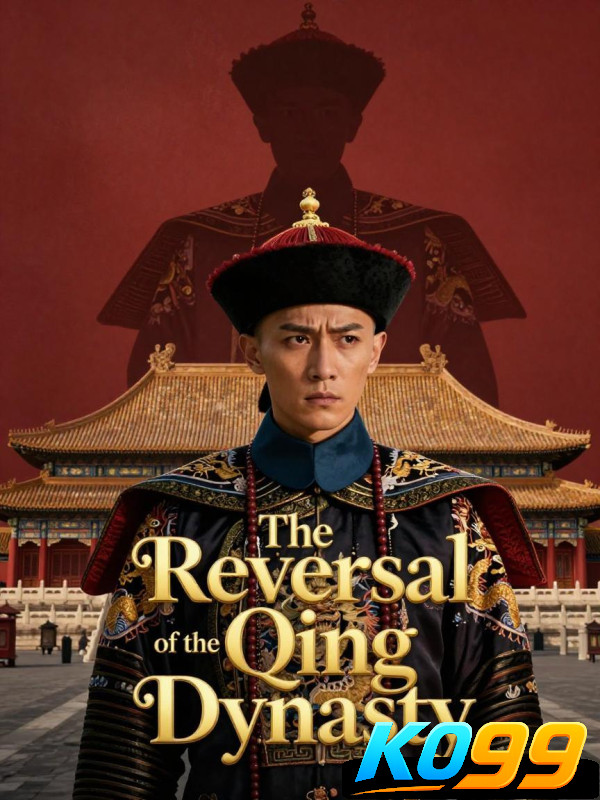
You’ve been transported to the “Great Qing Dynasty,” in the 20th year of the Qianlong reign. It’s the height of the “Golden Age,” and with the Qianlong Emperor at the peak of his power—would you still dare to rebel against the Qing? Rebellion is like playing on “Abyss Mode”; if you don’t rebel, you won’t survive. For the sake of your own well-being, you’d better be more cunning and less sincere. Rebelling against the Qing is true love—the more you scheme, the healthier you’ll be.



You’ve been transported to the “Great Qing Dynasty,” in the 20th year of the Qianlong reign. It’s the height of the “Golden Age,” and with the Qianlong Emperor at the peak of his power—would you still dare to rebel against the Qing? Rebellion is like playing on “Abyss Mode”; if you don’t rebel, you won’t survive. For the sake of your own well-being, you’d better be more cunning and less sincere. Rebelling against the Qing is true love—the more you scheme, the healthier you’ll be.
Chapter 1: Transported to the “Golden Age” Boom... rumble... boom... rumble... Muffled thunder rumbled in the sky, and the earth was scorched by the blazing sun. Waves of heat rose from the ground, and the fierce sunlight left the trees listless; only the cicadas chirped tirelessly. Lying in the shade of a tree was a gaunt figure, slowly crawling to his feet! This man’s surname was Zhang; he was the sixth son, also known as Zhang Liu, and was sixteen years old. A name? For someone who couldn’t even get enough to eat, what was a name? The villagers called him Gouzi—a name given by his mother. In the countryside, children were often given humble names to make them easier to raise. He was actually quite handsome, though his skin was tanned dark by the sun. His body was emaciated, a frame of skin and bones that made his malnutrition obvious at a glance. He stood about 1. 7 meters tall—an exceptional genetic feat for that era. He lived in Guangxi, hailing from a nearby village called Datong. Due to hunger and illness, he was the only one left in his family. With nothing but four bare walls to his name, he had no hope of inheriting any farmland; he could only rely on renting three mu of low-quality land from the town’s landlord, Mr. Huang. In previous years, when the weather cooperated, the yield was about one shi per mu. Following the principle of splitting the rent 50-50, and after deducting various taxes, he could usually keep about two dou per mu. With three mu yielding six dou, plus some wild vegetables and coarse grains, he could barely scrape by and manage to get by. However, this year brought a severe drought; not a single drop of rain had fallen for months. Deep cracks ran through the rice paddies. Although the southern region was not typically water-scarce, the prolonged absence of rain meant that the harvest of crops was meager at best. The imperial court doesn’t care about the harvest, but taxes must be paid in full. The landlords and Manchu lords’ profits must not be cut—whether the commoners sell their children or sell themselves, they must hand over the money. With all sorts of oppressive taxes and bandits in the area adding to the burden, the result is that the moderate are impoverished, the poor are destitute, and the destitute grow even poorer. Zhang Liu, reduced to skin and bones, wore a tattered hemp shirt that was as ragged as could be and filthy beyond belief. Stains here and there, mixed with sweat, had turned the hemp black and made it emit a sour, foul odor. Some might say that even if he were this lazy, he wouldn’t go so far as to skip a wash or a change of clothes. But who would know that he toiled nonstop from dawn till dusk? There had been no rain for a long time, and the crops in the fields were struggling, so he had to carry water from the river several miles away every day to water them. Otherwise, what would he do when the tax collectors came to collect taxes? How would he give the landlord his share of the harvest? How would he pay back the rent he owed? And how would he handle all the other miscellaneous taxes? Working from dawn till dusk, he never had a full meal to his name, surviving only on thin rice porridge made with wild greens and bran, devoid of oil or salt. The tattered hemp robe he wore was the only set of clothes his family owned; even taking a shower was a luxury—let alone changing clothes! He just had to endure such a life. But a few days ago, bandits from the mountains—dozens of miles away—sent word: they’d be coming in two days to collect grain, demanding that every household contribute at least a load of rice. and anyone who dared refuse would be sent to meet the King of Hell. Gazing at the rice jar, which held only a few handfuls of grain, Zhang Liu had no choice but to follow the example of most of his fellow villagers: he packed up his last remaining possessions and fled far away to hide. The crops in the fields were not yet fully ripe, so naturally, he could not concern himself with them much. To save grain and make it last a few more days, he ate only one meal of thin porridge each day. And so, Zhang Liu, who had been lying in the shade of a tree for half the day to cool off, passed away. The sleeping Zhang Liu was happy; he passed away dreaming of feasting on all manner of delicacies he had never even seen before. Yet the man who awoke now had feasted on all manner of food. A Zhang Liu unlike the one before—a soul from the future—had traveled through time and inhabited the body of this deceased man. At that moment, Zhang Rui, having just awakened, was suffering from a splitting headache. Looking at his two hands, which were nothing but skin and bones, he couldn’t help but squint. He touched his head in disbelief, only to be even more startled to discover a shameful, greasy little braid right in the middle of his bald head. At that moment, Zhang Liu’s memories began to slowly resurface. Fragments of memory relentlessly assaulted Zhang Rui’s mind. After a bout of excruciating headache, Zhang Rui finally grasped the reality of his time travel. “It’s actually the Qing Dynasty—and it’s that old man Qianlong, Huang Ama from *The Story of Zhenhuan*. If you travel back to the Qing without rebelling, you’ll end up with a drill up your ass. But this is Qianlong we’re talking about. Most of the wars that needed to be quelled have already been settled; all that’s left are minor skirmishes. The key is, this is the ‘golden age’ touted by the Qing sycophants and their Bao’yi lackeys—there aren’t hordes of people struggling to survive. what the hell is the point of this?” Zhang Rui muttered to himself after acquiring Zhang Liu’s memories. Finally, the more he thought about it, the angrier Zhang Rui became, and he couldn’t help but shout at the top of his lungs. But in the end, the only response he received was the echo of the open wilderness, along with a few passing bird calls!!! “This is definitely Abyss Mode. Even if God wanted to mess with me, He wouldn’t do it like this!” With a bitter laugh, Zhang Rui had no choice but to face reality. It was a sweltering midday; rumbling thunder echoed in the air, yet no rain fell, and only the cicadas chirped tirelessly. His stomach growled, and Zhang Rui, having taken over Zhang Liu’s body, began to feel hungry. In his memories, he had just finished a hearty meal, but now faced with the ironclad reality, his stomach didn’t lie. Looking at the scene before him, Zhang Rui couldn’t help but ask the heavens once more: had he committed some grave sin to be cast into this damned place to suffer? “Ah, how I miss the air conditioning and soda back home! A few more steaks would be perfect. A few bowls of rice with meat would do just fine too!” Daydreams are always intoxicating, but reality is: “Gurgle, gurgle” His stomach was growling again. Sure enough, hunger was no ordinary discomfort. His body, deprived of calories, trembled in protest, and cold sweat broke out in waves. “No wonder people who can’t get enough to eat are willing to risk decapitation to revolt.” Zhang Rui could no longer bear the hunger. If he didn’t eat soon, he might just become the most tragic of all time-travelers. Even an ant clings to life; how much more so for him, having just been resurrected. If he were to die right after being transported here, there’s no guarantee he’d be transported again if he died a second time. If he ended up in the Stone Age, that would be quite the predicament. “Ah, better to live a miserable life than die a noble one. It all comes down to my own skills; I’ll just take it one step at a time.” Having come to terms with this, Zhang Rui stopped agonizing over it. Drawing on Zhang Liu’s memories, Zhang Rui found the only bit of food in the bundle—a rice ball. Staring at this scrap of leftovers, Zhang Rui couldn’t help but complain. With this, Zhang Liu had planned to make it last for two days. Right now, Zhang Rui didn’t want to think about any of that. After finishing the last of the cold leftovers in the bundle, Zhang Rui still didn’t feel like he’d eaten a thing. He looked at the bamboo water tube he carried in his bundle and, without caring whether the water inside was raw or not, guzzled it down. Only then did his stomach feel slightly better. Then, Zhang Rui stood up. Relying on Zhang Liu’s memories, he made his way toward the village, hoping to find something else to eat along the way. The sun was setting in the west; it was late afternoon. After winding his way up and down hills for most of the day, Zhang Rui was finally returning to this familiar yet unfamiliar village—Datong Village. It was a small village with only about thirty households. Most of the villagers were tenant farmers who had migrated from elsewhere, so the surnames were quite diverse. The total population wasn’t large—roughly two hundred people, with about sixty or seventy in their prime. The village was built around a valley, with a small river nearby, making it convenient for fetching water for drinking, washing clothes, and cooking. The clear, sweet, and cool river water would normally be a great spot for swimming and splashing around during the hot summer. However, the water level was now only ankle-deep, barely enough for drawing water for cooking. The only brick-and-tile houses in the entire village were those used by the two landlords from town, Huang Fugui and Li Decai, for collecting rent. The six other households that were slightly better off had built mud-brick and tile houses, while the rest were mostly mud-brick and thatched huts, with a few wooden and thatched structures. The houses were built in a somewhat haphazard and chaotic manner, looking not much better than those disorganized shantytowns. “I’m finally back,” said Zhang Rui, catching his breath as he stood on the hillside looking down. “So this is what they call a golden age. If I could go back in time, I wouldn’t even want to be emperor. Heaven didn’t even give me some kind of time-travel artifact or something. It’s really unfair. Don’t other people who time-travel come back with some kind of advanced AI system or artifact? Why do I have nothing?” After half a day of self-examination, Zhang Rui discovered that aside from having slightly more strength, he possessed nothing else. No strange, high-intelligence voice in his head, no spatial storage system, and no divine artifact to carry. Even this strength was likely inherent to this body—enough to lift a hundred or two hundred jin of weight, or draw a one-shi bow to fire two or three arrows. In the ancient world, where physical strength was highly valued, this level of strength was merely “decent” for ordinary people, but for martial artists, it was only average to below-average. Superhuman strength was out of the question. “Gurgle, gurgle” His stomach protested again. The breakfast he’d eaten that morning couldn’t possibly last until evening, so he had no time to sit here feeling bored and pensive. “Stop complaining. You’ll have something to eat in a minute,” Zhang Rui said, weighing the pheasant in his hand. It was actually a stroke of luck for Zhang Rui. On his way back to the village, he’d spotted a patch of wild greens that hadn’t been picked yet. Just as he was about to go gather them, he came across this pheasant. He was still about twenty meters away from the pheasant when, without a second thought, Zhang Rui hurled the cast-iron pot he was carrying on his back and the kitchen knife he had with him right at it, and the poor pheasant was killed on the spot. The reason Zhang Rui could throw so accurately was thanks to the “special forces” grandpa from his neighbor’s house, who had trained him for a few years out of boredom when he was a teenager. Looking at the pheasant in his hands and feeling the weight of the wild greens on his back, Zhang Rui couldn’t help but feel a sense of security—as the saying goes, “With food in hand, one’s heart is at ease.” Zhang Liu’s house was on the western edge of the village, situated right on the outskirts. Because it was so remote, he didn’t run into a single soul on the way back. Relying on his memories of Zhang Liu’s home from earlier that day, Zhang Rui found his way back naturally. Looking at this low, dark mud-brick and straw hut, Zhang Rui couldn’t help but feel down again, cursing inwardly: “What exactly did I do wrong to deserve this suffering here? Hah, it’s only a little better than living in a log cabin!” He used his only key to unlock the single lock. Stepping inside, one glance was enough for Zhang Rui to instantly grasp the full meaning of the phrase “bare walls.” On the left side of the room, next to a window with an empty wooden frame, a stove had been propped up with three pieces of wood. An iron pot sat atop it, with firewood burning beneath; some unburned logs lay inside, and a pile of firewood was stacked nearby. Not far away stood a water jar with chipped corners, covered by an old wooden lid. In the very center of the room stood a shabby, makeshift wooden table and two long benches. To the right were three rooms. Except for the one nearest the entrance, which had a tattered cloth draped over the doorway, the other two held firewood and a chamber pot respectively; the smell of these two things mingling in the air could be detected right from the doorway. When a person is hungry, their mind is focused solely on finding something to fill their stomach, not on pondering this or that. Zhang Rui was now thinking only of starting a fire, cooking a meal, and filling his stomach. So he took the iron pot off his back and set it on the rack. Thankfully, he hadn’t smashed it when he threw it down—that would have been a real hassle. There was still some water left in the water jar at home, so Zhang Rui simply scooped it out with a ladle until the pot was full. He picked up the flintstone nearby and struck it repeatedly for nearly half an hour before finally getting a fire going. It took over two hours from starting the meal to actually eating—and that was using the quickest method: after plucking the wild chicken clean, he tossed the innards aside and threw the bird straight into the water to boil with the wild vegetables. It was around eight o’clock in the evening. Fortunately, it was summer—days were long and nights short—so it hadn’t yet grown completely dark. Even so, the inside of the house had grown dark. There were no oil lamps, so they could only rely on the light from the campfire for illumination. Logically speaking, most people in this era would suffer from night blindness, but whether it was because Zhang Liu had eaten too many wild vegetables or because a lowly person doesn’t have a lowly fate, this body certainly didn’t have it. This was the one thing Zhang Rui was somewhat satisfied with. Looking at the wild vegetables in the chipped bowl and the chicken in the pot, Zhang Rui felt he could finally breathe a sigh of relief—it was time to eat. “Too bad there’s no salt; otherwise, it would probably taste even better!” Zhang Rui remarked after downing a chicken drumstick with a bowl of wild vegetable soup. If it weren’t for his common sense—that one shouldn’t eat too much after a long fast—the whole chicken and half the pot of wild vegetable soup would likely be gone in no time. What people fear most is silence. After finishing a chicken drumstick and two bowls of wild vegetable and chicken soup, as he sat quietly watching the crackling firelight, Zhang Rui realized just how terrifying this silence was. It felt as if a raging flood or a ferocious beast were about to swallow him whole; he felt as though he couldn’t breathe. In this sweltering heat, he should have been lounging on the sofa with the air conditioner on, munching on snacks, sipping soda, and watching TV. Instead, he found himself sitting alone by the fire, roasting in the heat. Since ancient times, it has been said that it is easy to go from poverty to luxury, but difficult to go from luxury back to poverty. If he were still as unworldly as Zhang Liu, perhaps it wouldn’t matter. But Zhang Rui, who had experienced electric lights and air conditioning, tasted ice cream and soda, and enjoyed all manner of delicacies, felt like crying at this very moment—and in fact, tears began to stream down his face. After a bout of melancholy weeping, Zhang Rui suddenly felt unbearably uncomfortable all over and realized he hadn’t taken a shower yet. As a modern person, he simply couldn’t stand this sweltering heat without a shower, especially since he hadn’t bathed in days. Today’s hard labor had made the sweat-soaked stench even stronger, and his whole body felt sticky. By the light of the fire, after using up the last drop of water in the tub, Zhang Rui finally managed to complete the most basic hygiene routine of a modern person—though he hadn’t washed that greasy tuft of hair on his head. With only that rat-tail strand on his bald head, there was naturally no need to blow-dry it. Exhausted and not daring to think too much, Zhang Rui simply fell asleep! A day of exhaustion, a day of heartache, a day of hunger—this was a day of being transported to a golden age.