
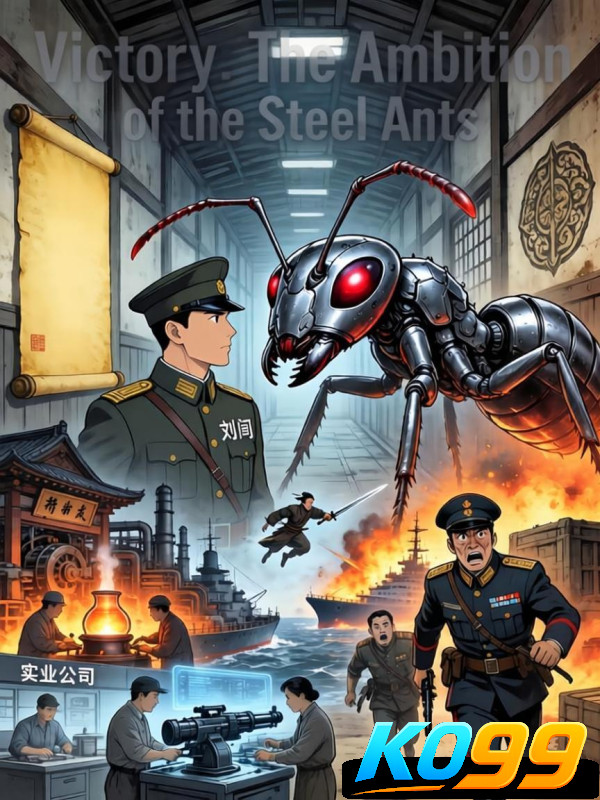
Liu Yun, nicknamed “Little Ant,” was banished to the unfamiliar Republic of China by a divine being for spouting nonsense. He happened to end up on a Japanese steamship. It was the third year of China’s War of Resistance, and in Europe, Hitler had just become Führer. Just as he was feeling terrified and helpless, he encountered a strange little alien ant. As the ants grew and their ambitions soared, they sent shockwaves through the industrial, military, and spiritual cultivation sectors of the Republic of China, transforming a nation where the people were struggling to survive into a vibrant and colorful society. The Japanese Emperor was forced to issue an edict, proclaiming himself the most peace-loving emperor. His most valiant Imperial Army would rather march into Southeast Asia to challenge the Anglo-American allied forces than face the little ants.



Liu Yun, nicknamed “Little Ant,” was banished to the unfamiliar Republic of China by a divine being for spouting nonsense. He happened to end up on a Japanese steamship. It was the third year of China’s War of Resistance, and in Europe, Hitler had just become Führer. Just as he was feeling terrified and helpless, he encountered a strange little alien ant. As the ants grew and their ambitions soared, they sent shockwaves through the industrial, military, and spiritual cultivation sectors of the Republic of China, transforming a nation where the people were struggling to survive into a vibrant and colorful society. The Japanese Emperor was forced to issue an edict, proclaiming himself the most peace-loving emperor. His most valiant Imperial Army would rather march into Southeast Asia to challenge the Anglo-American allied forces than face the little ants.
"The Ambitions of the Steel Ants of Victory," Volume 1: Turbulent Times in the Republic of China—The Rise of Dragons and Serpents