
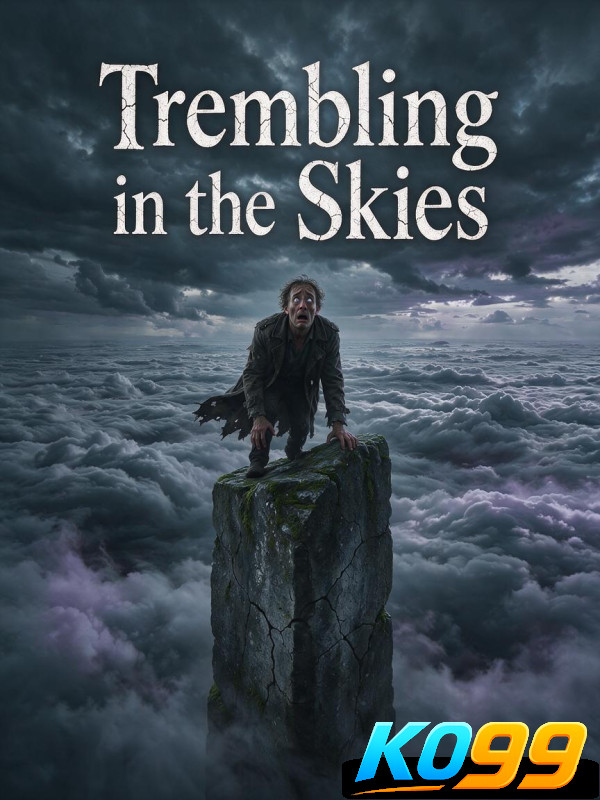
I wake to discover that I am stranded more than a thousand meters above the ground, standing on the top of a stone pillar that rises through the clouds. I have no memory of how I reached it, no obvious route down, and no idea whether anyone else is nearby. The impossible location turns a simple question—how do I get home?—into a test of observation and survival. As I search the pillar for clues, I begin to suspect that arriving here was not an accident and that the sky around me is hiding an even larger mystery.



Chapter 22: Big Goals and Small Goals
“No one wants to stay atop the stone pillar—with no food or water, exposed to the wind and sun, and facing rain, snow, hail, lightning, and even all sorts of inexplicable disasters.” “One false step could send you tumbling to your death.” “So, for those of us stuck atop the stone pillar, our greatest wish is, of course, to lower the pillar’s height so we can return to safe ground as soon as possible.” “Does that mean we have to save up a thousand points all at once before we can redeem them to lower the pillar’s height?” “The answer is, we don’t have to wait that long.” “To encourage us to use our points to lower the pillar as quickly as possible, the conditions at each height along the pillar’s 1,000-meter length aren’t exactly the same.” “Every 100 meters marks a milestone; for every 100 meters the pillar descends, our living conditions will see a significant improvement.” “For newcomers still stuck at the top of the 1,000-meter pillar, the most urgent need is sufficient drinking water.” “When the pillar’s height drops to 900 meters, we’ll receive a water dispenser.” “At first, the water dispenser will provide only 100 mL of water per day.” “After that, for every 10 meters the pillar descends, the daily water supply from the dispenser will increase by 100 mL.” “I’d like to remind everyone that reaching 900 meters is crucial for survival at the top of the stone pillar—it takes even higher priority than being promoted from an extra to a minor supporting role.” “Otherwise, if there’s a gap of three days or more between shoots—and if there’s no rain, snow, or hail in the surrounding area during those days—we won’t be able to replenish our water supply. We might end up dying of dehydration before we even make it back to the film studio.” “That way, once we descend to the 800-meter platform, we’ll receive a daily supply of 1. 1 liters of purified water—boiled water, to be precise. Additionally, at the 800-meter level, we’ll gain access to another crucial item: a packet of instant noodles whenever we return to the stone pillar during breaks in filming.” “After that, for every 10 meters we descend, we’ll receive an additional packet of instant noodles.” “Of course, the quality of instant noodles has also improved over time—from the dry noodles at the beginning to the ones that came with seasoning packets later on.” “When we reached the 700-meter platform, we were not only provided with three meals a day of instant noodles, but each meal also came with a serving of pickles.” “At that point, we had essentially solved the problem of dying of thirst or starvation.” “After that, for every 10 meters we descended, we gained one additional side dish option for our daily instant noodles—ranging from pickles to ham sausages, braised eggs, and more.” “When we reached the 600-meter platform, we had access to a flush toilet suspended from the edge of a stone pillar.” “Although the flush toilet solved the problem of using the restroom, sitting down on it from the edge of the stone pillar each time was potentially life-threatening—one wrong move and you could fall right off the toilet.” “So, for every 10 meters we descended after that, there were some changes around the toilet—such as adding a suspended concrete slab below to rest our feet on, increasing the slab’s surface area, and installing a flushing mechanism.” “There’s even an additional sink, and for every 10 meters we descend, an extra 0. 1 metric tons of tap water is provided daily, allowing us to wash our faces and hands.” “When we reached the 500-meter platform, we found a well-equipped, freestanding restroom attached to the side of the stone pillar, which completely solved our toilet problems. We also received a basic water heater.” “After that, for every 10 meters we descended, we received a steady supply of sufficient quantities of toothbrushes, toothpaste, mouthwash cups, washbasins, hand towels, bath towels, body wash, and shampoo.” “During this time, we continued to face harsh conditions such as torrential rain, hail, extreme heat, and bitter cold, and we longed for facilities to shelter us from the elements. When we reached the 400-meter platform, a bathroom was attached to the side of our restroom, equipped with a full set of bathing facilities. We also received a canopy, which was set up atop the stone pillar to shield us from the sun and rain.” “After that, for every 10 meters we descended, makeshift windbreaks were gradually added around the perimeter of the canopy.” “When we reached the 300-meter platform, our makeshift canopy turned into a roof, and a platform appeared at the top of the stone pillar, giving us a small six-square-meter space at the very top.” “By this point, we were no longer worried about falling. It felt almost like being at home—except we couldn’t go outside, and the space was very small.” “After that, for every 10 meters we descended, the small room grew by one square meter.” “By the time we reached the 200-meter platform, the six-square-meter ‘little house’ had expanded to sixteen square meters.” “We finally had a small area next to our bed where we could move around, and we also received a stool.” “After that, for every 10 meters we descended, the little house continued to grow by one square meter, and we also received an additional piece of furniture—such as a desk that automatically produced a book every day, or a wardrobe that automatically produced new clothes, and so on.” “When we reached the 100-meter platform, our little house had electrical outlets and power, so we could turn on the lights and no longer feared the darkness of night.” “After that, for every 10 meters we descended, the little house continued to expand, and we gained an additional appliance—such as an air conditioner, a refrigerator, a TV, a set-top box, a bread maker, an oven, a dishwasher, a game console, and so on.” “As for what happens after we reach the ground… that’s not something I’m here to answer.” After finishing her answer, the woman in sunglasses looked at the director. “Answer accepted. You’ll receive 5 points,” the director announced. Hearing the woman in sunglasses’ description, the extras began to buzz with discussion. This strange film studio really goes to great lengths to force them to earn points. But it had to be said that these conditions were indeed very tempting to them—people trapped atop the stone pillars. Especially after enduring extreme thirst and hunger. After all, back when they were perched atop the stone pillars, water and food had been nothing but a distant dream. Now, at last, they had hope and a goal to strive for. The big goal is to accumulate enough points to return to the ground—1,000 points in total—while the smaller goal is to first accumulate 100 points so they can descend to the 900-meter level and get a water dispenser. “All right, it’s your turn to ask a question.” The woman in sunglasses was in high spirits after earning 5 points; she gestured toward Gao Fei. “It’d be best to ask some high-quality questions, like the ones she just asked,” the woman in sunglasses added before Gao Fei could speak. Answering a question earns 1 to 5 points, and since the total number of questions is fixed, she naturally hoped everyone would ask high-scoring questions. “Then I’ll ask what happens after we land. Will we be able to go home then? Will we go back to our normal lives?” Gao Fei looked at the woman in sunglasses with eager anticipation.