
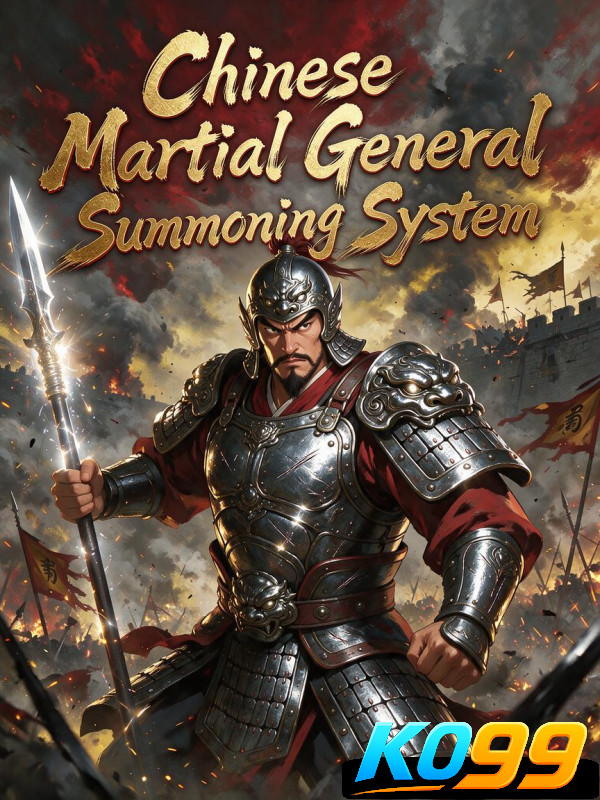
Liu Ji, a modern homebody, awakens as a young refugee in a war-torn world resembling ancient China. The once-powerful Great Jin Dynasty is collapsing under famine, rebellion, banditry, and pressure from northern tribes. His fortunes change when he gains a system that can summon famous Chinese military commanders from history. Starting with little status or power, Liu Ji gathers capable allies, organizes defenses, and gradually builds influence in a fractured land. His rise from displaced youth to ruler depends on how well he can use the talents of legendary commanders without losing sight of the people living through the chaos around him.



Chapter 36: Organizing the Army (Part 1)
Liu Ji, leading the troops bound for the border garrison at Qianzhou, left the borders of Qi County that same evening and entered the neighboring Gong County. The route Liu Ji chose was the same one he had taken on his way to Qi County. Upon entering Gong County, Liu Ji ordered the troops to set up camp in a sheltered mountain hollow in the wilderness. However, Liu Ji didn’t even have a single… “We are all bound by the same fate, so today I, Liu Ji, am giving you all a choice! If you’re willing to follow me to Qianzhou to defend the border against the Hu and risk your lives for a chance at wealth and honor, then step to the right!” If you’re unwilling to go to Qianzhou to guard the border, stand on the left. I, Liu Ji, won’t force any of you. I’ll give each of you 10 jin of rice and let you go freely. I won’t report those who leave to the clans of Qi County. However, for the sake of your lives and your families, I advise you to stay far away from Qi County and live under assumed names!” Liu Ji’s words instantly sent the crowd of over 700 men into an uproar. “What! Can this captain really let us go?” “Is there such a good deal? We get 10 jin of rice just for leaving?” “This Captain Liu may not be very old, but he’s quite a decent fellow. Anyway, we brothers have nowhere else to go. Why not follow Captain Liu to Qianzhou to kill a few barbarians? Even if we die, we won’t bring shame upon our ancestors in the afterlife!” “It’d be best if we didn’t have to go to Qianzhou. I’ve heard the barbarians have already wreaked havoc on the four northern states—going to Qianzhou to guard the border is no different from going to die!” “That’s right! Better to live a miserable life than die a noble one. If you lose your life, what good is anything else?” “My whole family’s back in Qi County—where else could I possibly go? Sigh—” Liu Ji planned to expel those who wanted to flee from the ranks outright. That way, even if the remaining men were reluctant to go to Qianzhou to guard the border, they would at least stop trying to escape on their own—they’d have a reason they had to go to Qianzhou, such as for the sake of their families, just like himself. This way, he could train the remaining men. He was confident that with a general like Yue Yi—whose command rating reached 91 points—he would surely be able to forge a group of elite soldiers. Even if he had only 100 elite soldiers at his disposal, they would be many times stronger than 800 disorganized rabble. As for the official document requiring him to arrive in Chengyin County, Dai’an Commandery, in Qianzhou with 500 men, Liu Ji wasn’t worried. The journey to Chengyin County was at least several hundred li, offering ample opportunities to recruit soldiers. In Wanzhou, which had suffered three consecutive years of severe drought, as long as he had grain, he could recruit as many able-bodied young men as he wanted. Finally, when Liu Ji saw the number of men standing on the right, his face twitched involuntarily. Of the remaining 700-plus men, fewer than 200 had lined up on the right, willing to follow Liu Ji to Qianzhou to guard the border; the other 500-plus had chosen to leave. Although Liu Ji was somewhat disheartened—after all, too few had stayed—he still waved his hand and ordered several military commanders to help distribute grain, giving each departing soldier 10 jin of rice. To Liu Ji’s surprise, 22 soldiers who had originally chosen to leave changed their minds upon seeing that he was actually distributing rice to those departing; they declined the 10 jin of rice and chose to stay instead. In the end, Liu Ji tallied the numbers and found that a total of 218 men were willing to follow him to Qianzhou to guard the border. The situation wasn’t too bad after all; at the very least, he no longer needed to worry about a mass desertion among his troops. From among the 218 men, Liu Ji selected 150 young, physically fit men to form his first army, over which he exercised complete control. He entrusted the training of these 150 men directly to Yue Yi and assigned Cheng Yi, You Tong, Liu Pi, and Gong Du to serve as Yue Yi’s deputies. As for Hua Xiong and Chen Hao, Liu Ji kept them by his side as bodyguards; after all, with a combat rating of only 17, any random person could easily take his life, so having Hua Xiong and Chen Hao nearby provided some added security. Chen Hao became the coachman for the carriage carrying Liu Ji and the twin sisters. The remaining 68 men became support troops; aside from the 25 who were temporarily serving as coachmen, the other 43 were assigned as cooks and laborers. Over the next few days, Liu Ji and his group remained in this mountain pass, allowing Yue Yi and the others to train the 150 soldiers, while Liu Ji himself studied martial arts under Hua Xiong to strengthen his physique. After all, the system had made it clear: if Liu Ji’s real-world martial arts skills didn’t improve, any martial prowess points he earned as rewards in the future might be wasted. Waste is shameful, and Liu Ji was absolutely unwilling to let that happen.